
Lead generation has always been a key to efficient business growth. Identifying potential prospects, crafting campaigns to draw their attention, building relationships with them, and gently pushing them to conversion form the basis of marketing. But there are plenty of questions here. What is AI lead generation, exactly, and what can it do? How does it differ from traditional methods, and what kind of tools and techniques can you use to scale growth? Discover all the answers in the complete guide below.
The thing is, about 80% of leads don’t result in conversions. This fact used to frustrate business owners immensely, as they spent a fortune researching the market and building campaigns, and their effort led nowhere. That’s not to mention people responsible for lead generation directly: months of dedicated work could result in underwhelming results.
When AI entered the world and gained momentum, though, things began to change. In 2026, companies have a chance to do research and find potential customers in a proverbial single click. There is no need to spend weeks and months looking for clients: AI can do it for you, leaving you to focus on building meaningful relationships and securing conversions.
Table of Contents
AI Lead Research Explained
AI lead research means using AI technologies to identify, qualify, and prioritize potential customers. You can control the process yourself or rely on a virtual assistant to help you find leads, but either way, AI should be an undeniable part of it.
Here are the four technical foundations AI lead research stands on:
- Machine learning algorithms that analyze customer and campaign historical data to predict the likelihood of conversions;
- Natural language processing that allows AI Assistant to understand user queries and speak to people in an authentic-sounding manner;
- Predictive analytics that forecast the behavior of potential leads and help businesses identify potential clients with the biggest value;
- Automated scoring models that rank leads and put them into different categories based on how likely they are to convert.
AI has the power to scan thousands of sources at the same time. These are websites, social media platforms, forums, and databases, each with its own target audiences and trends. AI identifies these trends: for example, it can tell what content generates the most engagement, which products do best at the moment based on reviews, and so on.
It can also determine the areas for demand generation, giving you an opportunity to introduce a product, spread awareness about it, and make people develop interest in it. These are huge chunks of work that used to take a ton of resources; now, businesses can save time by focusing on actual conversions and customer retention.
Traditional vs. AI-Driven Lead Generation

Some companies still prefer traditional lead generation. Such methods rely on a manual search for leads, cold mass outreach, and static contact lists. There is a minimum of personalization here because getting in touch with tens of thousands of people is time-consuming, and very few of them will end up actually converting into customers.
Speaking with clients offline is also a part of traditional efforts. Scalability is limited here, but the quality of conversions might be higher.
AI-driven lead generation is much faster and way, way more scalable.
Teams evaluating different prospecting workflows often compare platforms and look for a Clay alternative that offers lead enrichment, automation, and AI-powered research while better matching their budget or workflow requirements.
This is what it can offer:
- Automatic identification of prospects across multiple channels at the same time;
- Real-time scoring and classification of leads into appropriate categories;
- Highly personalized outreach that adjusts to specific prospect groups;
- Integration with other marketing tools that simplify the process even further.
Businesses with data spread across a CRM, website, and marketing platforms may need AI development services to connect those systems and build lead scoring around their own sales process.
Speed, scalability, and personalization are the three key differences between traditional and AI lead generation, and the latter wins in each of them. It is faster, it finds and covers thousands of prospects in record time, and it’s capable of sending highly personalized messages to each identified group.
However, lead generation is cheaper when you perform it on social media platforms, and this is where the traditional approach might also be better. For instance, AI still struggles to identify Facebook users who will suit your business best, partly because a big part of communication takes place in closed groups. Human input is essential in this regard.
Top 5 AI Research Techniques
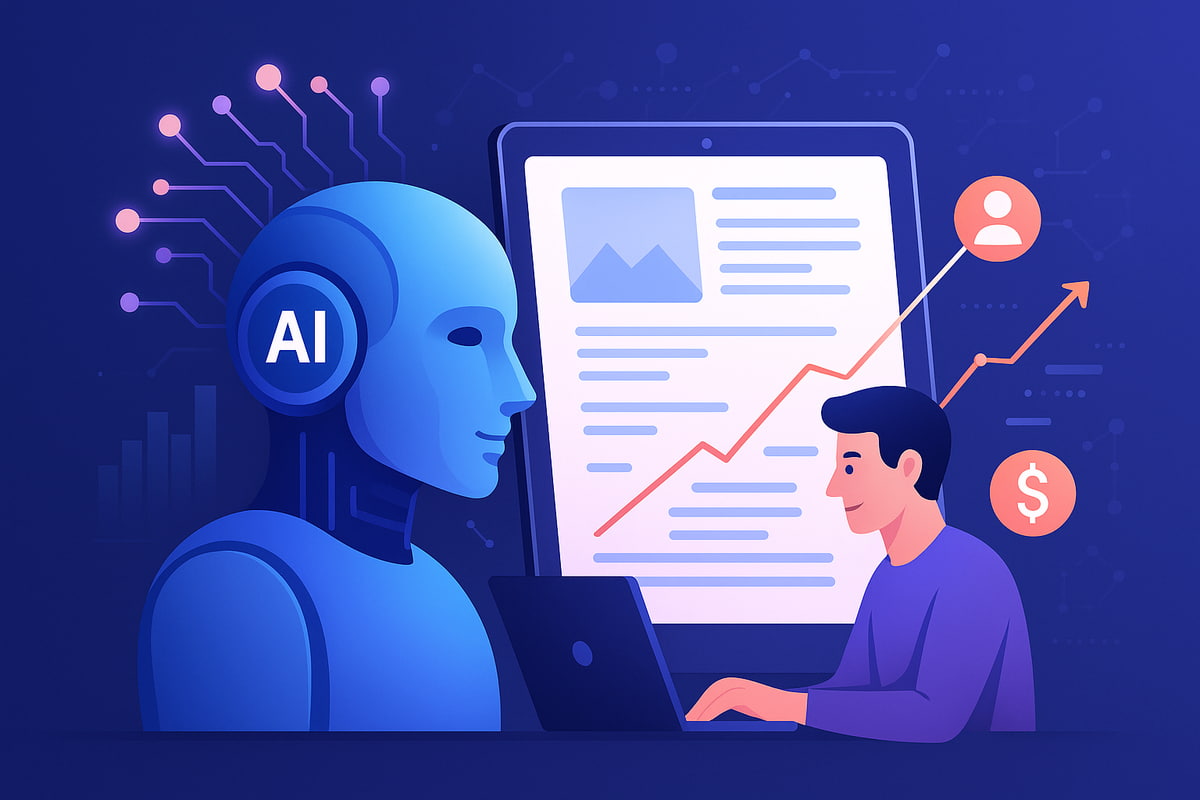
Every business hopes to scale efficiently, but sometimes this eagerness leads to negative consequences. Using AI for lead generation may sound simple in theory, yet when it comes to practice, a lot of unexpected problems pop up.
Think of it this way: you can always optimize your lead generation funnel to get better conversions, but for that, you need to understand what you’re doing. This includes grasping the nuances of your business, your clients, and the techniques you’re using. Take a look below: we’ll present the 5 best AI research techniques you can use in your marketing in 2026.
Supervised Learning Models
The first important technique business owners must understand is called “supervised learning models.” In simpler words, AI studies historical data related to customers and old campaigns.
For example:
- An AI model learns that 100 people ‘liked’ your social media post;
- 20 of them turned into customers, while 15 messaged you with questions;
- AI researches the demographics and purchase behavior of these people;
- It also looks into their overall engagement history based on the collected info.
After taking all this data into account, the AI model presents your research to you. Your sales teams will get a ranked list of leads, so they’ll see which groups of people they should target first and foremost.
Unsupervised Clustering
Unsupervised clustering is another AI research technique for identifying leads. It’s focused on identifying behavioral patterns, putting similar leads into specific clusters, and pinpointing those who don’t fit anywhere.
As an example, some buyers are price-sensitive. The slightest cost fluctuations can push them toward or away from your product. Another cluster might contain early adopters of products and technologies, and then there will be a third cluster for users who don’t display any specific characteristics.
This technique allows marketers to personalize their lead generation campaigns in a way that appeals to specific clusters. It makes marketing more precise, even when you’re using it at a significant scale.
Natural Language Processing (NLP)
Like we’ve mentioned previously, NLP helps AI interpret human language and mimic it in a believable manner. This is what this technique allows it to do:
- Perform sentiment analysis to understand whether the lead’s response is positive, negative, curious, or neutral;
- Recognize intent by distinguishing leads who are one step away from converting and those who are merely browsing;
- Extract information and use it in communication, such as pulling out product or customer names, locations, or events.
This is an essential research technique for AI bots that speak with website visitors and determine what mood they are in and which information they might still need.
Reinforcement Learning
The most experienced human experts and the most advanced AI models can still make mistakes. It’s natural, and reinforcement learning is a technique that helps AI models test different strategies.
AI has access to zero-party data, meaning information that the customers shared with your company directly. So, let’s say that at 6 PM, AI sent a follow-up email to customers who chatted with bots, added a product to their cart, but didn’t complete the purchase. Only 5% of these people converted as a result, which is far from satisfying.
Storing this information for future use, AI changed its approach and sent the next batch of follow-ups at 11 AM. This time, 39% people proceeded to buy a product. Such a tactic allows AI to adapt to what works and what doesn’t, which increases efficiency and promises more growth.
Graph Neural Networks
Unlike other AI-led research techniques, this one works by establishing connections between the parties. AI sees leads as nodes, and the connections between them as edges. These connections can be anything; for example, shared interests, mutual friends, identical ties to specific locations, etc.
Imagine that 2 of your leads converted into customers. AI can determine that these two people have one mutual friend in common. Chances are, this friend will also want to make a similar purchase; this fact turns them into a lead with potentially high value.
5 Best AI Tools for Lead Research in 2026

There were 12 best lead generation tools for 2025, but in 2026, the situation has changed a bit. Let’s make an overview of the best 5 tools businesses should consider using at the moment:
| Tool | Free Plan | Key Feature | Ideal For |
| Zoho CRM | Free plan with basic features | Smart Zia assistant who helps with lead scoring and forecasting. | B2B teams and companies in need of highly customized CRMs. |
| Mailchimp | A free trial available; duration depends on what plan you select | Email automation is available, in addition to the feature allowing AI to help with subject lines. | Small businesses, start-ups, and various non-profit organizations. |
| Apollo.io | Permanent free plan with basic features | A huge contact database is already available. | SaaS companies and businesses focused on rapid growth. |
| HubSpot Sales Hub | A free trial for 14 days | AI prospecting agent who delivers actionable insights. | SMEs interested in multifunctional CRM and sales automation systems. |
| LinkedIn Sales Navigator | A free trial for 30 days | Advanced lead search filters. | Recruiters and B2B sales teams. |
53% of marketers spend more than 50% of their budgets on lead generation. It’s a lot, and the problem often lies in a severe lack of tools that can make their jobs easier.
Each of the tools from the table above has its strengths and weaknesses. Each comes with a free plan or a trial, so you can try them all before deciding which of them will be of use to you first and foremost. Think of your needs, scale plans, and budget constraints, and make your choice.
How to Make AI Lead Research a Part of Your Workflow
We’ve covered plenty of essential factors related to AI lead generation, but that’s still the beginning. To benefit from the info we’ve shared, you need to have a clear idea of how you can make AI research an actual part of your active workflows.
Here are the five steps you will want to consider:
- Define your goals by deciding whether you want more leads, faster scalability, or higher lead quality, and choose suitable tools that can help you;
- Connect the AI tools you’ve chosen with your CRM to make sure that all the lead data goes into your system in real time;
- Automate lead scoring by letting your AI assess which people are more likely to become customers and personalize its reach;
- Monitor how AI lead generation is going by tracking performance metrics and adjusting your campaigns accordingly;
- Hold onto your human team to make sure that relationship building and the closing of important deals depend on them.
As AI becomes a more integrated part of lead generation workflows, businesses also need clear processes for overseeing how these systems are used. An AI governance framework can help establish guidelines for human oversight, data handling, and responsible AI use.
Don’t forget that specifics might differ based on your industry. IT firms have to follow the tips for successful lead generation in their sector; food startups have to rely on suggestions personalized for their own market. AI should be a natural extension of your workforce; it will help you make smart decisions, but your input will remain precious.
AI-powered lead research can also involve an email finder MCP server, which allows compatible AI assistants to access company and contact data, verify email addresses, and enrich lead records using real data. This can help teams turn their research into targeted lead lists without switching between multiple tools.
Common Mistakes and Ways to Avoid Them

There is no doubt at this point that AI can enhance your lead generation to a shocking extent. Scaling growth with its help can be a piece of cake, but only if you avoid the common pitfalls.
Unfortunately, many businesses make AI-related mistakes when trying to improve the efficiency of their lead generation. What are they? That’s what we’re about to explore.
Rejection of AI
Rejecting AI leads to one of the most common lead generation challenges, aka the absence of efficient systems that can ensure scalability. Human touch is essential; there is no arguing about it, but that’s why it’s important to balance both. AI is the only tool that can give you an opportunity to contact tens of thousands of prospects in a personalized manner within a day.
Poor Data Quality
One of the most common problems with AI lead generation is the inadequate quality of data. This is why it happens:
- Human employees are inattentive when inputting data, so it ends up being incorrect, and AI makes flawed conclusions;
- Several employees work on filing the same data, and they focus on different aspects, which leads to inconsistencies;
- Information gets outdated at some point: contact details change, new people assume new roles, and AI gets lost in all the chaos.
That’s why you need to regularly audit your data and set up automated refresh cycles.
Insufficient Personalization
AI delivers many potentially valuable insights, but some companies don’t use them effectively. In most cases, this has to do with personalization.
Let’s say that AI has segmented your audience based on their preferences and buying patterns. Instead of relying on this information to craft personalization messages for each segment, some marketing teams continue to send generic emails and reminders. This nullifies AI research and your investments in it.
Key Metrics for Measuring the Success of AI Lead Generation
About 61% of marketers consider lead generation one of their biggest challenges, largely because they have no idea how to evaluate its success. Fortunately, all you need in this scenario is to develop a list of metrics that will help you assess the direct impacts of your AI research.
Check out these popular metric examples:
- Lead volume shows the total number of leads AI generated for your business within a set timeframe;
- Lead score accuracy illustrates how well AI predicts which leads are more likely to convert into clients;
- Cost per lead shows how much you spend per one acquired lead as compared to using traditional methods;
- Engagement rate demonstrates how often leads interact with AI-generated content like chatbots and emails;
- Customer lifetime value measures whether AI-driven leads result in more profitable relationships with your clients.
There are more metrics you can use to guarantee that you keep scaling efficiently, including sales cycle length and time to qualification ratio. The more of them you apply, the more precise results you’ll get, and the clearer it’ll be if your AI lead generation brings in the results you need.
Do Your AI Lead Generation Effectively

Now you know what AI lead generation is and how incredibly useful it can be for businesses that hope to scale. Use these insights to boost your efficiency; follow the key steps to craft an effective lead generation plan, and save weeks and months of your time.
Think about what goals you want to achieve. If it’s scalability, select the right tools, learn how to operate them, and educate your team accordingly.
Always measure the efficiency and quality of your AI leads. If you notice that something isn’t working out, and you end up with generic profiles that never convert into paying clients, look for mistakes in your workflows.
In most cases, the issue lies in poor quality and incorrect AI implementation. The tools can help you find countless leads in an hour, but it’s human employees who need to do a final assessment and work on building long-term relationships with clients.
The future of lead generation is rooted in AI, so every business must learn the basics and start using them while there is still time. Companies that reject AI in its entirety are guaranteed to lag behind in terms of time, money, and efficiency. The key to scalability hides in a successful synergy between AI tools and human experts, so make sure you rely on both to the maximum.
Frequently Asked Questions
How much time can AI save on doing lead research?
While statistics differ from company to company, it’s been proven that AI can save from 20 minutes to an hour per lead. There is no need for human teams to comb through endless social media or LinkedIn profiles and websites any longer. AI can gather all this data and assign scores to each profile in minutes.
How does AI lead generation benefit businesses?
Scalability is the biggest benefit AI can offer to businesses, though it’s far from being the only one. It improves targeting to a huge extent; more than that, it provides fast but personalized outreach. As a result, companies get higher conversion rates and reduced costs, and most importantly, they deliver better experiences to customers.
How to identify mistakes in AI lead generation?
Monitoring the quality of leads and assessing the results of AI research are two vital pillars that companies should focus on. Some mistakes apply to email marketing lead generation, while others occur in other sectors; they might have different nuances, but the basics remain the same. In the vast majority of cases, the problems begin with flawed or downright incorrect data.
This leads to inaccurate predictions and wasted effort. Failure to act on AI-issued recommendations and insights is another common issue; to avoid them, check data accuracy on a regular basis. Review segmentation, take AI suggestions into account, and update data the moment it changes.
How to tell that AI lead generation is effective?
AI-powered lead generation is effective when you can measure its success through tangible metrics. Comparison is the best test in this regard. Compare AI results to the outcomes you get via traditional methods, and you’ll see which approach is more efficient.
Specifically, pay attention to how many leads you get at what rate when relying on humans vs. AI. Check engagement metrics and draw conclusions on this basis.