
As an architect, your main focus is designing buildings, not constantly chasing clients. Many firms grow through reputation and a strong portfolio, but those are passive strategies. Relying only on them means waiting for the right client to appear instead of actively creating opportunities.
To take control of growth, you need a system that keeps you in front of potential clients, shows your expertise, and builds trust before contracts are signed. That system is email – strategic, professional communication that delivers value and turns prospects into clients.
Done well, email marketing for architects is one of the most cost-effective and high-return methods available. This guide will show you how to set up a strong foundation and create campaigns that convert.
Table of Contents
Why Email Marketing for Architects is Non-Negotiable Today
Before you start, it’s important to know why email marketing works so well for architects. Its benefits are a perfect match for an industry with long timelines and expensive projects. Establishing a professional small business website provides the essential foundation for these long-term marketing efforts, acting as the central hub for your firm’s brand and portfolio.
Builds Trust and Authority
Clients make a huge financial decision when they hire an architect. They choose who they trust. Email lets you regularly show your expertise and how you work, which builds that trust long before they ever need to sign a contract.
Manages Long Timelines
A homeowner may think about building for years. A commercial project might be planned half a decade in advance. Sending useful emails keeps your firm fresh in their mind, so you’re the first call when they are finally ready to start.
Displays Your Work Effectively
A website portfolio is just pictures. Email lets you explain the story. You can show early sketches, construction photos, and finished results together. This gives a much better sense of your process and the final product than a simple online gallery.
Offers a High ROI
Email marketing for architects delivers more value for the money than almost any other marketing method. The cost is low (mainly just your time), and you are communicating directly with people who have already shown interest in your services.
Provides Direct Access
Social media platforms control who sees your posts. Email bypasses that. Your message goes straight to a client’s inbox. You control your email list; you have no control over your social media followers.
Phase 1: Strategy & Setup in Email Marketing for Architects

Before starting the details of email marketing, you need a clear foundation. This step defines your strategy, chooses the tools you will use, and identifies your target audience.
Step 1: Define Your Goals and Audience
What do you want to achieve? Your goal will dictate your entire strategy. Common goals for architects include:
- Generating leads for new projects.
- Establishing thought leadership in a specific niche (e.g., sustainable design, healthcare facilities).
- Keeping past clients engaged for referrals or repeat business.
- Announcing new services or firm news.
Who are you emailing? Create audience personas:
- The Residential Dream Client: A homeowner, educated, has a budget, inspired by design magazines.
- The Commercial Developer: Pragmatic, focused on ROI, square footage, and project timelines.
- The Past Client: Already knows your quality, needs reminders, and reasons to refer you.
Step 2: Choose an Email Marketing Platform (ESP)
Do not use your personal Gmail or Outlook inbox for marketing. A professional Email Service Provider (ESP) is essential. They handle deliverability, automation, analytics, and compliance with laws like GDPR and CAN-SPAM.
Recommended platforms include:
- Mailchimp: Suitable for beginners with an intuitive interface and a free tier.
- ConvertKit: Designed for content creators and lead nurturing workflows.
- HubSpot: Provides full-funnel tracking by integrating with CRM platforms.
- ActiveCampaign: Sophisticated automation features for complex sequences.
These platforms ensure proper handling of email campaigns while maintaining regulatory compliance.
Step 3: Build Your Email List (The Right Way)
Your list is your most valuable asset. Quality trumps quantity every time. For more ideas on maximizing the value of your subscribers, see 13 Easy Ways to Profit from Your Email List.
Here’s how to attract subscribers:
The Lead Magnet (The Bait)
Offer a valuable piece of content in exchange for an email address. This is the most effective method.
For Architects
A guidebook (“5 Things to Know Before You Build Your Custom Home”), a design webinar, a portfolio lookbook, a cost calculator spreadsheet, or access to a video tour of a stunning project.
Website Sign-Up Forms
Place opt-in forms prominently on your website: homepage footer, “About Us” page, and, most importantly, a dedicated landing page for your lead magnet.
In-Person Events
Collect emails at open houses, speaking engagements, or industry conferences.
Content Upgrades
Offer a downloadable PDF version of a popular blog post (e.g., “Sustainable Materials Checklist” to go with a blog post on eco-design).
Crucial Rule
Always use double opt-in (where a user confirms their subscription via a second email). This ensures list quality and compliance.
Phase 2: Crafting Your Content
What do you send to your list? Consistency and value are key. Plan a mix of these content types.
1. The Newsletter
This is your regular broadcast, sent monthly or quarterly.
- Featured Project Deep Dive: Don’t just show a picture. Tell the story. What was the client’s challenge? How did your design solve it? Show initial concepts, sketches, and the final result. Explain the choice of materials or the integration with the landscape.
- Firm News: New hires, awards won, moving to a new studio. This humanizes your firm.
- Behind the Scenes: Post a snapshot from a site visit, a team brainstorming session, or a fresh model in progress. Real moments help create stronger connections.
- Industry Insights: Share thoughts on a local project, updated building codes, or emerging sustainable tech to highlight your expertise.
2. The Automated Email Sequence
This is a series of emails automatically sent when someone subscribes.
Welcome Series (3-5 emails):
- Email 1: Immediately after sign-up. “Thanks for downloading our guide! Here it is.”
- Email 2 (Day 2): “A bit about our philosophy…” Link to a foundational blog post or video.
- Email 3 (Day 5): “See our work in action.” Showcase your signature project.
- Email 4 (Day 7): “Have a project in mind?” A soft call-to-action to schedule an introductory call.
3. Project-Specific Campaigns (The Direct Line)
Target emails for a specific purpose.
- Portfolio Launch: “Our latest project, [Project Name], is now complete. Take a virtual tour.”
- Open House Invitation: “You’re invited to experience our recently completed [Project Name].”
- Webinar Announcement: “Join us for a free live Q&A on Kitchen Renovations.”
Phase 3: Design & Copywriting
This is where you make sure your emails match the quality of your architecture. They need to look professional and read like they came from a real person at your firm.
Design: Keep It Clean and Professional
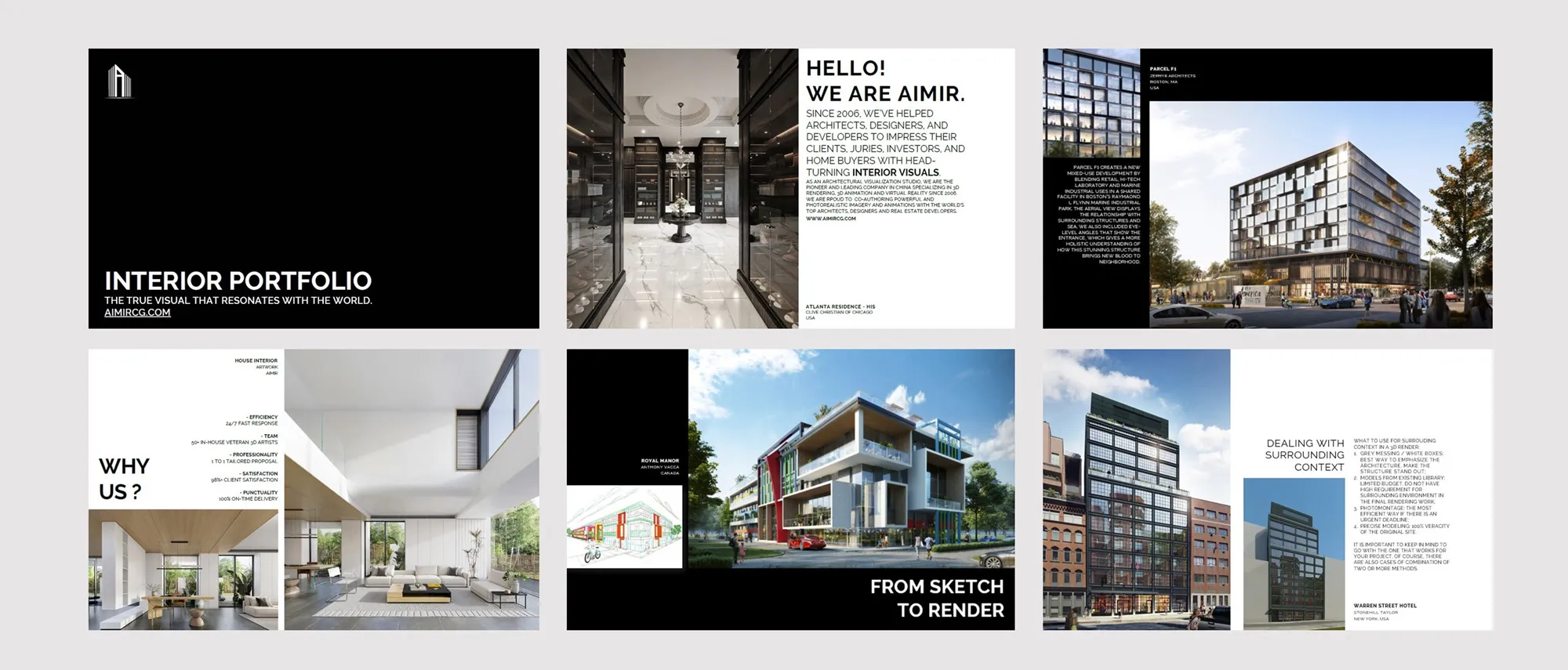
Your number one tool is photography. Great photos sell your work better than anything else, so use your best shots.
Stick to a clean layout. Use plenty of empty space, simple fonts, and your brand’s colors. Don’t cram too much in. Since most people will read this on their phone, double-check that everything looks good on a small screen. Write short, catchy subject lines that make people want to open the email.
Most importantly, be consistent. Use your logo, your colors, and your voice every time. People should know it’s from you before they even finish reading the subject line.
Writing: Talk to Clients, Not at Them
Stop writing like an architect for a moment. Clients don’t care about the name of a beam technique; they care about how it will make their life better.
Instead of saying “We used a cantilevered structure,” try “We gave you a deck that feels like it’s floating over the view.”
See the difference? One is a spec; the other is a benefit. Describe materials by their advantages, not just their names. “Charred timber” becomes “a beautiful, weather-resistant material that won’t ever need painting.”
Real experiences are more relatable to clients. Talk about how a family loves to spend time in their new kitchen or how a well-designed, light-filled workspace makes employees feel more at ease and productive.
And every email needs one clear goal. What do you want the reader to do? Be blunt about it. Use a clear button that says exactly that: “Schedule a Call,” “See the Project,” or “Download the Guide.” Don’t make them guess.
Phase 4: Segmentation & Automation
At this stage, the focus moves from basic setup to improving how messages are sent. Larger email lists need more structure and organized workflows to keep communication relevant.
Segmentation
Divide your list into smaller groups based on specific criteria.
- Project Type: Tag subscribers as interested in “Residential,” “Commercial,” or “Hospitality.”
- Project Stage: Segment into “Just Browsing,” “Ready in 6 Months,” or “Ready Now.”
- Client Status: Have separate segments for “Past Clients,” “Prospects,” and “Industry Partners.”
You can segment based on what lead magnet they downloaded or which project gallery they clicked on.
Automation
Set up emails to send automatically based on user actions.
If a subscriber clicks on a link about “sustainable design,” tag them and automatically add them to a sequence about your eco-friendly projects and philosophy.
After a consultation, automatically send a follow-up email with a link to a relevant blog post and a thank you.
Six months after a project completes, send a past-client email checking in and asking for a referral.
Phase 5: Analysis & Optimization
The numbers from your email platform tell you what’s working and what isn’t. Pay attention to them.
- Open Rate: This indicates the number of recipients who actually clicked on the email. You should certainly make your subject lines more intriguing if it’s low.
- Click-Through Rate (CTR): This shows how many people clicked a link inside. A low CTR means your content or your “call to action” (like a button saying “View Our Portfolio”) isn’t compelling enough.
- Conversion Rate: This is the most important number. It tracks how many people did what you wanted, like booking a call. This tells you if your email is actually generating business.
- Bounces and Unsubscribes: Bounces mean bad addresses; unsubscribes mean your emails aren’t hitting the mark.
The most effective way to get better results is through basic testing. Create two variations of the same email – changing elements like the subject line or visuals – and send them to small sample groups. Compare the responses, then roll out the version that performs best to the rest of your list.
Real-World Email Marketing for Architects: Practical Examples
Subject Line: Is your home ready for the next chapter?
Content: Focuses on multi-generational living or aging-in-place design. Showcases a relevant project.
CTA: “Read our blog post on designing flexible homes.”
Subject Line: Behind the plywood: A first look at [Project Name]
Content: Exclusive sneak peek of a project under construction. Raw images of the framing, interesting details. Builds anticipation.
CTA: “Follow our Instagram for more daily updates.”
Subject Line: Your invitation: Tour the Lakeside Modern home
Content: A beautiful, branded invitation to a past client and prospect event. Creates exclusivity.
CTA: “RSVP Now – Spaces are limited.”
Subject Line: 3 common mistakes in commercial tenant improvements
Content: Pure value-based thought leadership. Positions you as an expert who saves clients time and money.
CTA: “Download our TI checklist.”
Conclusion
Email marketing for architects is a long-term strategy for building client relationships, not a tool for making fast sales. It works like your design process: it requires a solid plan and a good email list to start. You then add quality content and professional design, and keep improving your approach by reviewing what works.
Investing in email creates an owned marketing channel that continuously produces leads, enhances your brand, and promotes company growth. To begin, define one clear goal, select an email service, create one strong free offering, and focus on growing your list. Your next major client may already be waiting to hear from you.