
Email remains one of the most marketing strategies business owners can use to foster meaningful customer experiences and drive conversions. With first-party data email marketing, you can create personalized campaigns that build trust and strengthen long-term customer relationships.
When crafted intentionally, personalized campaigns emails can help prospects learn more about your products and discover tailored solutions. And build long-term customer relationships.
Over time, with email marketing, you can build rapport, curiosity, and ultimately conversions when executed with care.
That’s why using first-party data email marketing strategies is crucial to creating emails that convert.
In today’s article, we’re clearing the air on what first-party data actually means. And how you can use it to turn more prospects into loyal customers via first-party data email marketing.
Ready to learn more?
Let’s begin.
Table of Contents
What is first-party data?
First-party data refers to information you collect directly from your website visitors, email subscribers, or social media followers. Always with user consent.
This type of customer data is gathered from your website activity, surveys and feedback forms, and support calls.
Third-party data relies on external tracking technologies or cookies from other domains like email enrichment data. However, first-party data gives you ownership and compliance with data privacy and privacy laws.
Take the brand Samsara, for example.
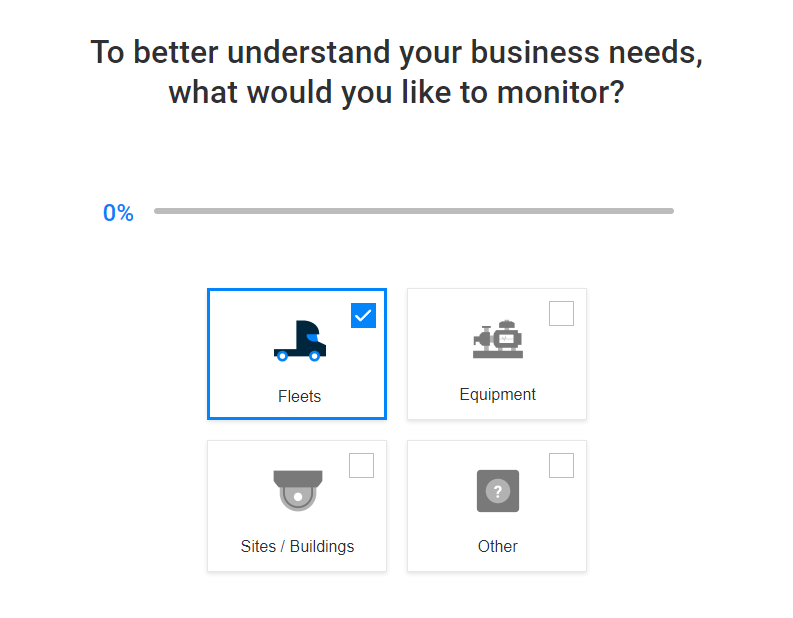
Its pricing page leads to an online form dedicated to finding out more about visitors’ specific product needs.
The form helps Samsara uncover if the prospect is interested in its monitoring software, safety equipment, or fleet dash cams. This is to make sure to offer them the best pricing plan and feature options.
Halfway through the form, leads have to enter their email addresses so they can receive a personalized pricing offer.
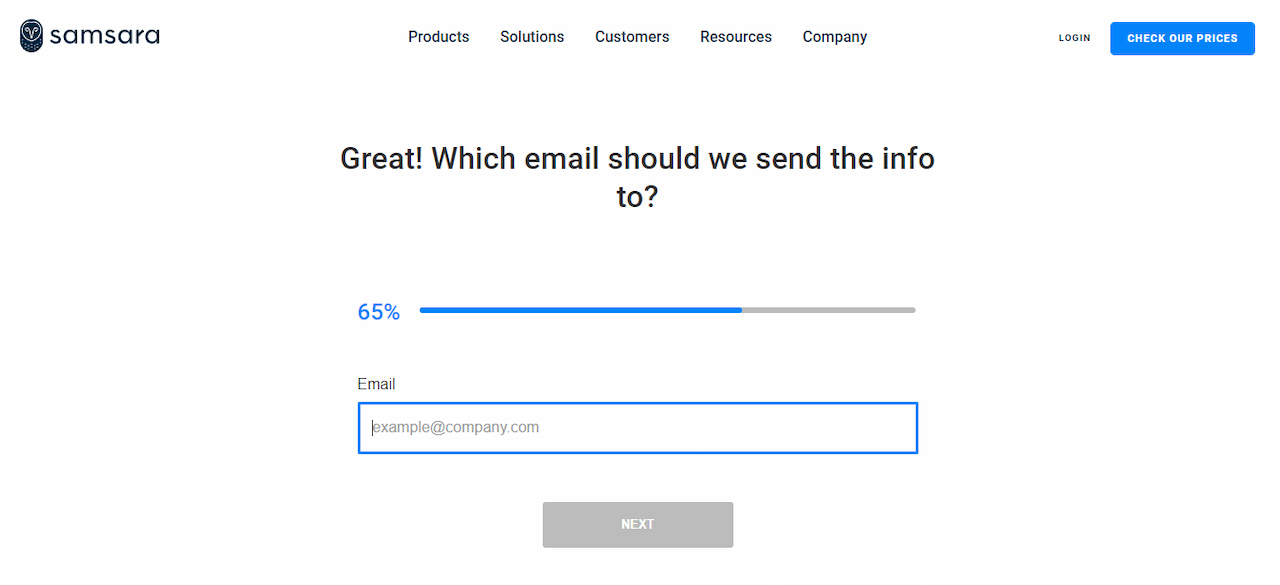
What a creative and simple way to gently nudge a prospect toward giving you pertinent first-party data. Implement quizzes and Q&A forms like these on your website and landing pages. It’s a practical way to encourage site visitors to provide contact info and strengthen your first-party data email marketing foundation.
Collect data via irresistible lead magnets
Make sure to implement different lead generation strategies to collect visitor data consistently.
One way to do this is to create irresistible lead magnets you can later use to inform your marketing emails.
Take a look at the following lead magnet example by Nlyte. It’s a company that provides data center infrastructure for enterprises.
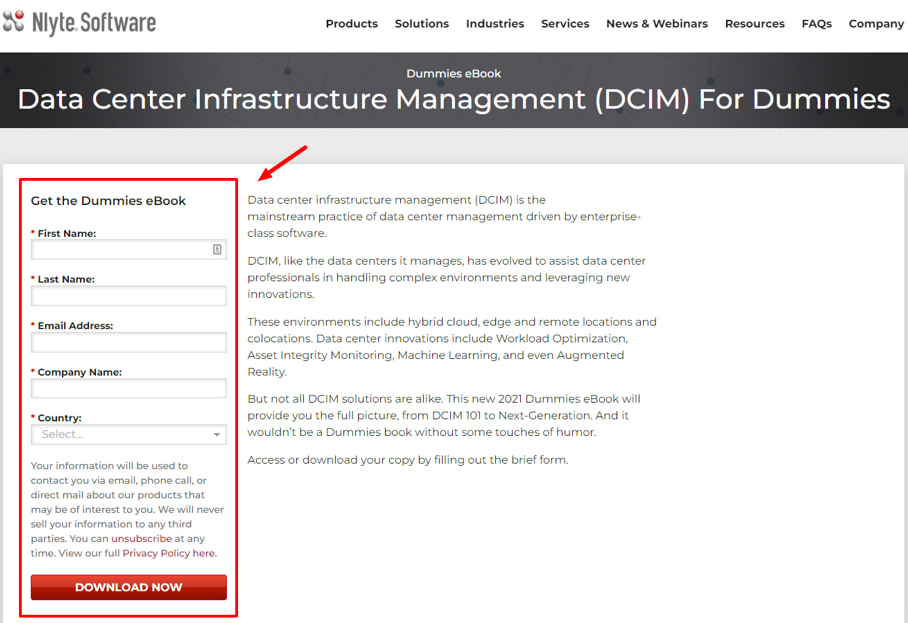
In this example, Nlyte created a “DCIM For Dummies” ebook that site visitors can download for free in exchange for their contact information.
This kind of material is very useful to its audience as this can be a complex topic to understand. By creating content that adds tremendous value to its audience, Nlyte has been able to easily capture visitor contact information. It uses this later to inform its email marketing strategies. Genius!
You can also embed lead magnets into industry-specific PPC ads to increase their visibility.
For instance, if you’re in the real estate industry, you can embed lead magnets into Real Estate PPC ads. This helps capture lead information while you advertise your services.
This kind of online advertising helps you drive visitors to your website at the exact moment they search for properties. Once you collect their information through various lead magnets, you can create personalized and segmented email marketing sequences. This allows you to warm up leads and boost conversions.
To create your own irresistible lead magnet, consider your audience:
- What do they need?
- What are they interested in?
- What kind of value or content are they looking for?
- What type of lead magnets have they shown interest in in the past?
Let’s say you’re a graphic designer specializing in print design for weddings. Your ideal customers might be interested in the following lead magnets:
- A how-to guide describing how to work with a designer to create custom wedding invitations;
- A listicle describing 10 things to look for in a print designer;
- An ebook showcasing the top prints every wedding needs.
Send personalized emails
Personalization is the heart of first-party data email marketing.
By leveraging insights from customer interactions like email engagement, website visits, and social media analytics, you can create dynamic content blocks.
These insights help you design personalized campaigns that resonate deeply with your audience and strengthen your email marketing impact.
Before launching a campaign, try A/B testing different versions of your emails. You can also test custom fields, and use a paragraph rewriter to see how different tones perform with your customers and leads.
Here are a few other personalization best practices:
- Address the recipient by name;
- Reference a problem they’re struggling with and how you can help solve it;
- Share valuable tips and tricks about a topic they’re interested in (relevant to your industry);
- Attach a personalized discount code (for instance, a code with their name embedded in it, like “Lindsay20OFF”);
- Reference a product or service they were perusing on your site, share social proof to build trust, and attach a fast checkout link;
- Send a personalized abandoned cart email to remind users about the products they viewed.
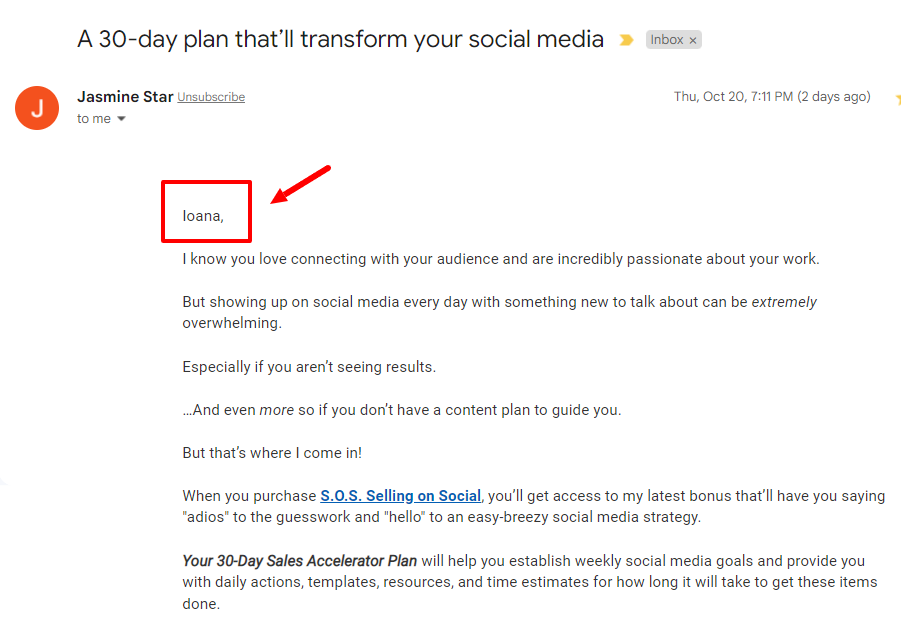
These points ensure every recipient gets personalized experiences, improving deliverability and campaign performance.
Highlight irresistible offers
Use first-party data to analyze user behavior, website analytics, and transactional data to uncover what motivates each customer profile.
For instance, if leads show interest in your chatbot customer service software but haven’t subscribed yet, simplify their decision-making process. Make it easy for them to say yes by offering value-driven incentives and clear next steps:
- Offering a generous discount toward their first month;
- Embedding a 30-day free trial link they can use to test-drive a subscription plan;
- Sharing a timed promo code;
- Offering a BOGO deal (i.e., “pay for one month, get your second month free!”);
- Having an influencer or VIP customer share a positive experience using your software via video and a quick checkout link.
You can also use analytics tools to predict when users are most likely to convert. These insights help you improve conversion rate optimization and drive better campaign results.
Include a prospect-approved call-to-action
Use first-party data to gather insights on which call-to-action (CTA) phrases your audience clicks on most.
Use this information to craft compelling CTAs that capture your audience’s attention.
Embed them in your marketing emails to encourage immediate action.
For instance, you might notice that certain audience segments are more likely to respond to different CTAs than others.
You might have one audience segment that prefers simple CTAs like “buy now”, “call today,” or “download ebook”. You might also have another segment that prefers more context. This can read something like, “sign up for our retreat” or “book your free discovery call.”
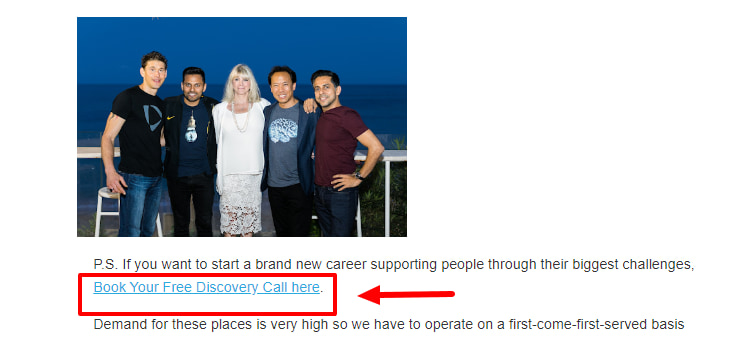
Whatever the case, use this information to design unique CTAs that align with audience preferences. Create email campaigns tailored to each specific audience segment for better engagement.
Showcase how you can solve their pain points
Understanding customer feedback from surveys, forms, or social media connections helps you identify what frustrates your website visitors.
Use that data to create personalized email marketing campaigns that address issues like delays, unclear instructions, or poor product fit.
For instance, if you’re an online retailer, then your audience might experience pain points, such as:
- Feeling annoyed due to late product deliveries;
- Unhappy with the quality of a product when it arrives;
- Disappointed because the product is missing pieces described in the online listing;
- Feeling frustrated because they don’t understand how a product works.
In this case, you can create four email campaigns dedicated to tackling each pain point on their list. These data-driven examples are the most effective email marketing campaign ideas because they directly address customer frustrations rather than just pushing a sale.
For instance:
- Email campaign 1: Highlight your fast shipping options and the supply chain measurements you have in place to prevent late deliveries;
- Email campaign 2: Embed videos showcasing customers or influencers receiving their products in real-time. Ask them to describe and show off the product they received. Bonus points for giving detailed insight into the quality of the product;
- Email campaign 3: Embed a demo video hosted by one of your brand’s CEOs, managers, or product designers. Ask them to open the package on camera and describe each piece the product comes with and what it’s for;
- Email campaign 4: Share a series of screenshots, mini videos, or an explainer video, walking prospects through how to use your product.
This not only enhances the customer experience but also builds credibility and long-term customer retention.
Wrap up
When done consistently, personalized email marketing powered by first-party data can spark curiosity and build lasting trust. Over time, it helps you nurture prospects and guide them toward meaningful conversions.
With first-party data email marketing, you can:
- Create irresistible lead magnets;
- Personalize your messaging to connect with your audience in a profound way;
- Understand and present offers that are most meaningful to your prospects;
- Discover and highlight CTAs your leads feel most drawn to;
- Showcase how your brand solves key audience pain points.
In other words, having access to first-party data is pivotal to crafting emails that convert.
If you’ve been curious about using first-party data in email marketing, this guide was designed to help you. We hope today’s article clarified how it can boost conversions and strengthen your marketing results.
Are you ready to see conversions soar?
Then go forth, and use the information we shared today to turn leads into loyal, paying customers.
To your success!
Want to create personalized campaigns that truly convert? Visit KyLeads to access expert tools, guides, and insights that can help you capture more leads and grow your business.
About The Author

Sarang is a passionate Content marketer and Account Manager at uSERP. He loves creating content and runs a blog on filmmaking and advertising.