
In this step-by-step guide, you’ll learn everything you need to know about creating the perfect lead magnets.
Imagine this: You’ve recently launched your business in a popular niche.
Do you have a great product? Yes.
Do you have affordable pricing? Also, yes.
Do you provide valuable information? Yes, yes, and yes.
Are you getting noticed? A big fat no.
The entire industry is cluttered with quality content. The top spots on the search engine results page (SERP) are taken, and despite your best efforts, you can only get your hands on a couple of email subscribers.
In sum, it’s not looking good for you. In fact, it’s looking pretty drab.
According to Demand Sage statistics, “61% of marketers believe that quality lead generation is the number one challenge that they face.”
Sound familiar?
Well, a lead magnet is here to save the day.
In digital marketing, a lead magnet is a tool businesses use to collect contact information from interested visitors and move them toward becoming customers.
Table of Contents
What are lead magnets?
Lead magnets are valuable resources you create to collect potential customers’ contact information, serving as a foundational element of successful e-commerce content marketing.
These magnets are often valuable and relevant enough that prospective customers actively look for them.
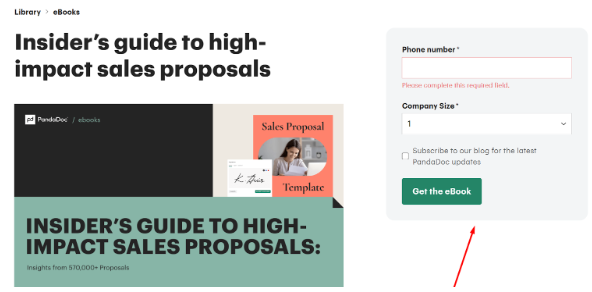
For example, while ebooks are completely free on PandaDoc, the platform does ask for your email address to give you access to them — that’s a powerful lead magnet.
How to create lead magnets
Follow these five simple steps to create compelling lead magnets to capture more sales leads and grow your email list.
Step 1: Identify your goal for creating the lead magnet
If you thought, “Duh, you create lead magnets to get leads,” you’re both right and wrong.
Let us explain why: While the primary goal for many business owners to create these magnets is to get leads, many companies also create them to establish trust in the industry.
For example, if a brand like Hers produces a gated content piece on the effects of branded antidepressants vs. Lexapro generic. Content like that will show their expertise in the niche, which is something a business that deals extensively with medication needs, especially since all of Hers’ content is reviewed by medical professionals.

So, before you even think about creating lead magnets, first decide on the effects you want them to have — this will help you analyze content topics and better understand your target market.
Alternatively, suppose you’re a larger brand with a few leads already in the pipeline.
You may now want to scale lead generation further. In that case, you might benefit from using social media listening tools or interacting with customers to strengthen your sales pipeline and identify topics they want discussed.
For example, in the freelance writing industry, one of the biggest topics of question is writing rates — so companies that cater to freelance writers may focus on creating lead magnets on the same topic.
Step 2: Decide on the format and pricing
Next up, decide on the format and pricing of your lead magnets. For instance, content upgrades (turning blog posts into case studies) or email newsletters can be great lead magnet ideas.
Some other popular lead magnets include webinars, ebooks, templates, cheat sheets, and interactive quizzes that encourage visitors to participate.
For example, Beaches of Normandy offers a World War II quiz linked in the footer and resources section of its website. Visitors are invited to test their knowledge, a tactic often referred to as gamified marketing. To see their final score or the correct answers, users are typically asked to provide their email address. Based on those responses, the company can segment the visitors and send offers for tours that match their interests.

However, quizzes are just one example. You can also create industry-specific tools or resources to help fill your sales funnel with high-quality leads.
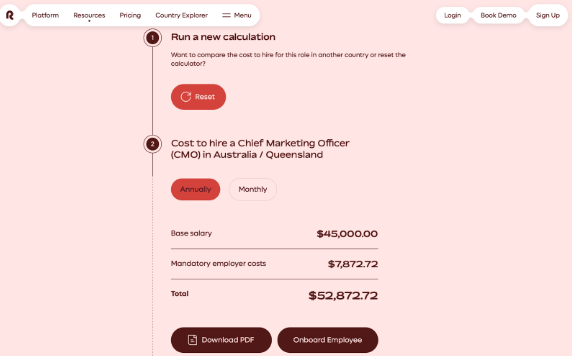
For instance, Remote, a company specializing in global HR, offers a handy calculator on their website that estimates the total cost of hiring a specific employee remotely in a particular country.
Additionally, while most lead magnets are free to use, they don’t necessarily have to be so. This really depends on who your customers are and how much they’re willing to spend.
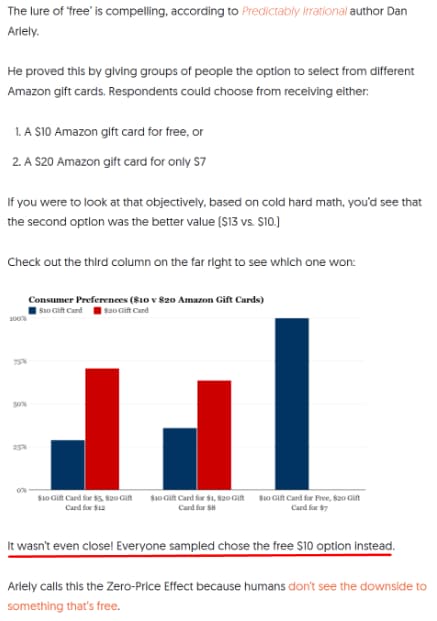
For example, would your customers pay a pretty penny for really valuable information that can deeply impact the way they work, or do they want a free resource (and would simply use this resource because it’s available for free)?
Consider doing a quick experiment to find the answers you need.
Once you understand whether your audience prefers free or premium resources, the next step is choosing the right format for your lead magnet. The table below outlines some of the most common lead magnet formats and when to use them.
| Lead Magnet Type | Best For | Example |
| Ebook | Educational content | Marketing strategy guide |
| Checklist | Quick implementation | SEO audit checklist |
| Calculator | Interactive tools | ROI calculator |
| Template | Practical tools | Email outreach template |
| Webinar | Training content | Lead generation workshop |
Step 3: Find the right partners to produce and promote content
Once you’ve finalized the above two steps, now’s the time to find the right partners you need to produce and promote your content.
What do we mean by this? Look for people who are subject-matter experts (SMEs) in their field, such as those experienced in email campaigns, to produce and promote your valuable lead magnets.
For example, if you’ve decided to create a video magnet, do you know who’s the best video producer who can make the video for you? What about the people in the video — who will those be? What insights are you going to add to your piece, and which experts are you going to bring on?
For example, if you’re creating a video on “Best Email Marketing Practices,” you can partner with Klaviyo experts who have years of experience producing emails for their audience, understand customer behavior, and have been partnering with email strategists.
Once the lead magnet is ready, consider promotion partners. Thought leaders and influencers can help distribute it to the right audience.
If you’re not sure where to find the right creators for your niche, using tools for influencer marketing can help you identify and vet partners based on audience fit, engagement rate, and content relevance — so your lead magnet reaches the people most likely to convert.
Checklist for evaluating your lead magnet
At this stage, also consider the following questions:
- Is my lead magnet valuable?
- Is it engaging?
- Is it relevant?
- Is it being produced and published at the right time?
- Does it turn visitors into leads?
- Does it have the right messaging?
- Does it match my brand voice and style?
- Will this impact my business in a beneficial manner?
- Have we covered the design aspects?
- Does it flow smoothly, and is it easy to understand?
- Will my audience like it?
- Have I partnered with the right folks?
- Does my headline sell the lead magnet without being “clickbaity”?
We know all these questions sound a bit too much, but brands have really been killing it with thoughtful and well-designed lead magnets.
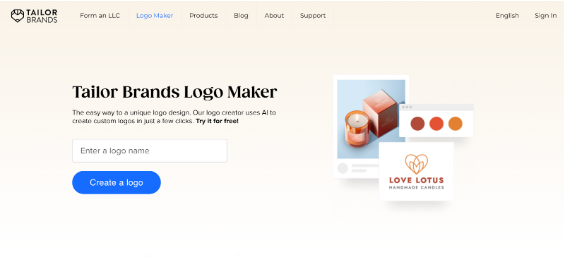
For instance, if you consider Tailor Brands, the company goes above and beyond to offer personalized lead magnets businesses can leverage (such as free logo makers and custom design consultations).
Moreover, it also uses insights to constantly refine and improve lead magnets based on a visitor’s industry, design preferences, or branding challenges.
Step 4: Start creating an offer for your lead magnet
Think of your lead magnet as a piece of content that offers something valuable to your ideal customers.
So, now is the time to develop the headline and decide on an offer to promote it.
HubSpot recommends thinking of your headlines as movie trailers and, in the same way, providing enough information to hook the viewer without giving away the ending.
As far as offers are concerned, you can either decide not to rely on urgency tactics (e.g., not keeping any limited-time availability for your magnets) or, instead, offer your target audience free access.
However, if you lean on urgency tactics, consider offering exclusive access, running limited-time offers, keeping only a couple of items in stock, sending “Last Chance” emails, using red to indicate urgency, etc.
Lastly, the placement of your lead magnet plays a significant role in how well it converts, too. For example, Later developed a guide on how to get free followers on Instagram and added two CTAs on their website to ensure it catches the reader’s eye and people click and convert.
One appears directly on the landing page:

Meanwhile, another effective lead magnet appears as a pop-up after a visitor stays on the page for a few seconds:

Placing your call-to-action buttons in the proper location on your landing pages and lead magnet forms can significantly boost conversion rates. Interactive tools can also act as powerful lead magnets because users become invested before they are asked for their contact information.
For instance, Alan’s Factory Outlet’s Interactive 3D Builder is the perfect lead magnet. This feature allows users to visually design their own carport, garage, or metal structure, experiment with different metal building prices, and customize dimensions and colors within their budget
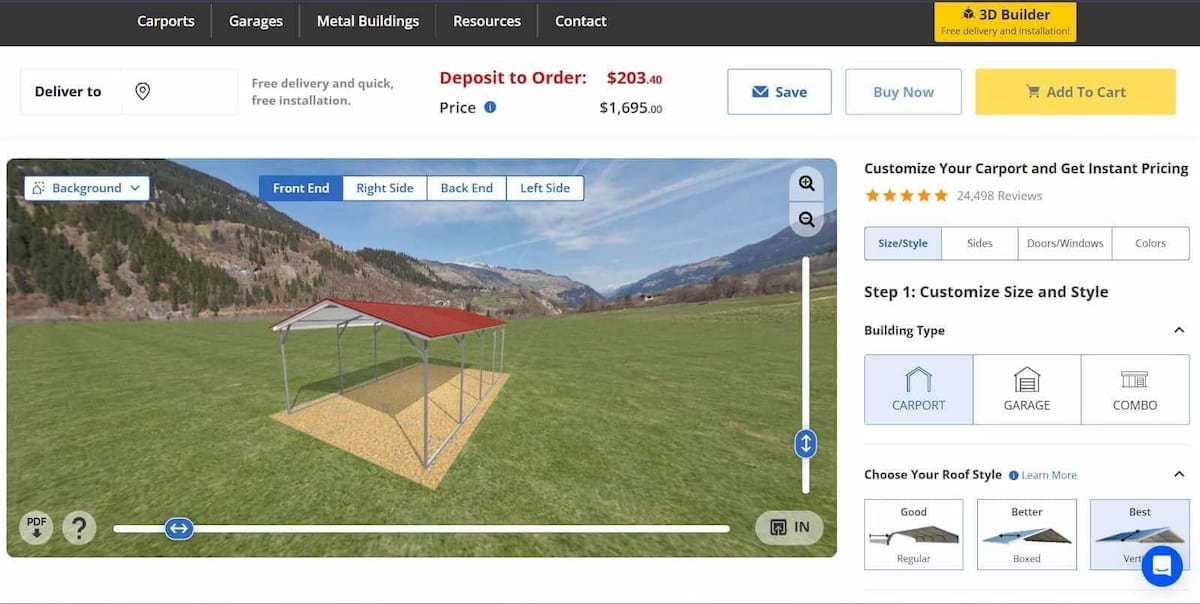
Lead generation occurs when visitors choose to save their design or request a quote. By the time their contact information is requested, they are already engaged and motivated to continue the buying process.
Step 5: Optimize, refine, and improve
Once you’ve published your lead magnets, now’s the time to take a closer look at your data and analyze customer conversations to understand how people interact with your lead magnets throughout their customer journeys.
Try to analyze whether they like it or not (or, rather, if they’ve even noticed it). After you gain access to their thoughts and understand what they liked and didn’t, you can move forward and refine your lead magnets accordingly.
You can also consider running A/B tests to see how well certain headlines, landing pages, CTA placements, colors, design elements, etc., perform, and to help you improve the visibility of your lead magnets (and gain access to potential leads).
Some of the best practices for creating a landing page for your lead magnet are:
- Making it easy to access (e.g., you can only ask for the most important details in your lead forms);
- If you use images, then place eye gazes near your CTAs/value proposition ;
- Showing the value you offer in your CTAs;
- Making your CTA a contrasting color;
- Using clear and concise language;
- Avoiding excessive use of jargon;
- Providing social proof.
Turn Your Lead Magnets Into Real Leads
Well, congratulations on making it to the end of this article and checking out some powerful lead magnet examples.
Once you start attracting visitors with valuable resources, the next challenge is converting those visitors into subscribers and qualified leads.
And that’s where KyLeads comes in.
KyLeads helps businesses capture and segment website leads using popups, quizzes, and opt-in forms, with controls over when each appears to visitors.
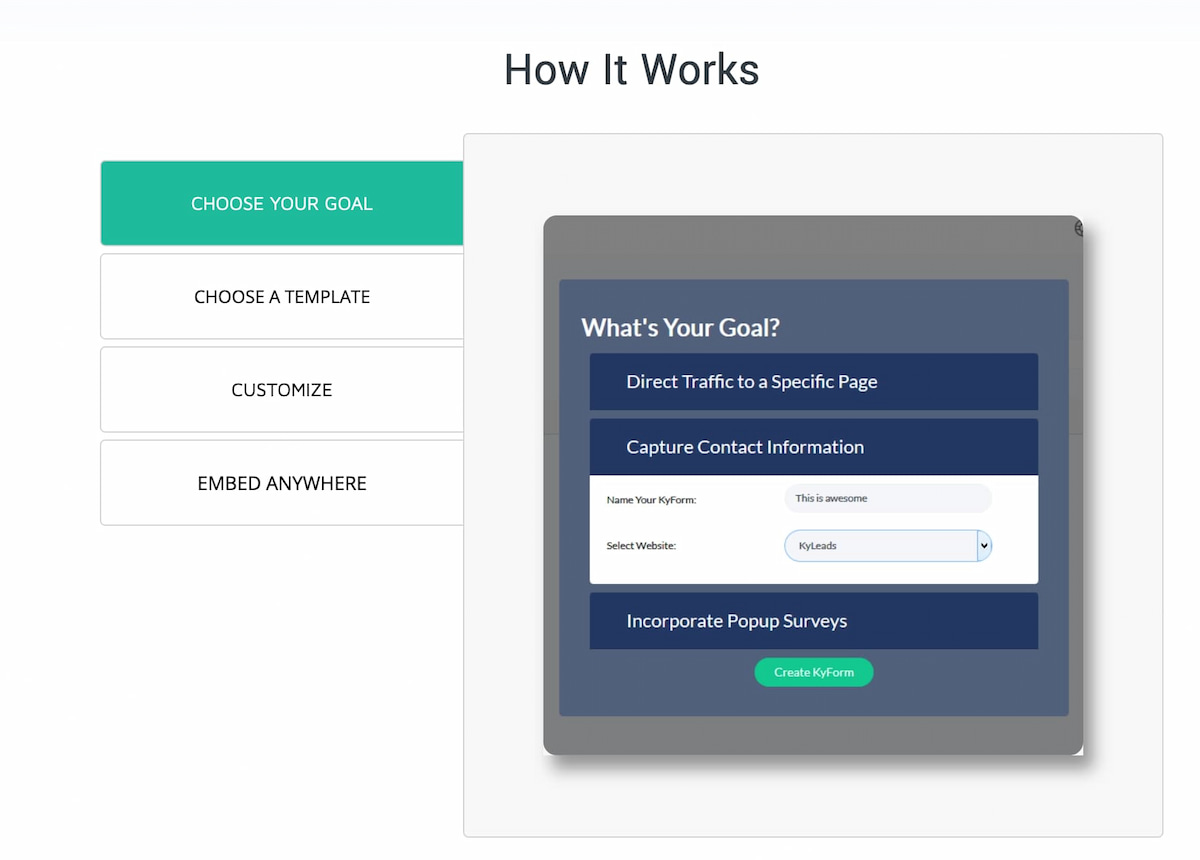
With KyLeads, you can:
- Create high-converting pop-ups to promote your lead magnets;
- Build interactive quizzes to engage visitors and collect contact information;
- Segment leads based on responses and user behavior;
- Connect with your email marketing tools to automate follow-ups;
- Track performance with built-in analytics and conversion reports.
By combining strong lead magnets with the right conversion tools, you can grow your email list faster and build a consistent pipeline of qualified leads.
Explore KyLeads to see how you can turn more of your website visitors into subscribers and customers.