
Lead generation is the main blood vessel of any business. Without having a steady flow of leads, no business can survive, especially considering how competitive the modern market is. However, these days, even the tried-and-proven strategies often fall short. B2B lead generation has changed – and changed a lot at that.
Buyers no longer wait for a sales rep to pitch them a product. They simply go on Google or ChatGPT, read reviews, watch videos, and do their own research, which ultimately affects traffic. This is why it’s important for businesses to take into consideration that shift in purchasing behavior and adjust their B2B lead generation strategies accordingly.
The good news is? You don’t need to reinvent the wheel. By combining proven channels such as SEO, email marketing, and LinkedIn with AI, you can attract the right people, earn their trust, and give them a reason to take the next step instead of waiting for prospects to come to you.
As Kipp Bodnar, CMO of HubSpot, puts it, “Channels have multiplied while attention shrinks. Today’s buyers trust people, communities, and AI results more than ads.”
Table of Contents
Start With a Sharper Ideal Customer Profile
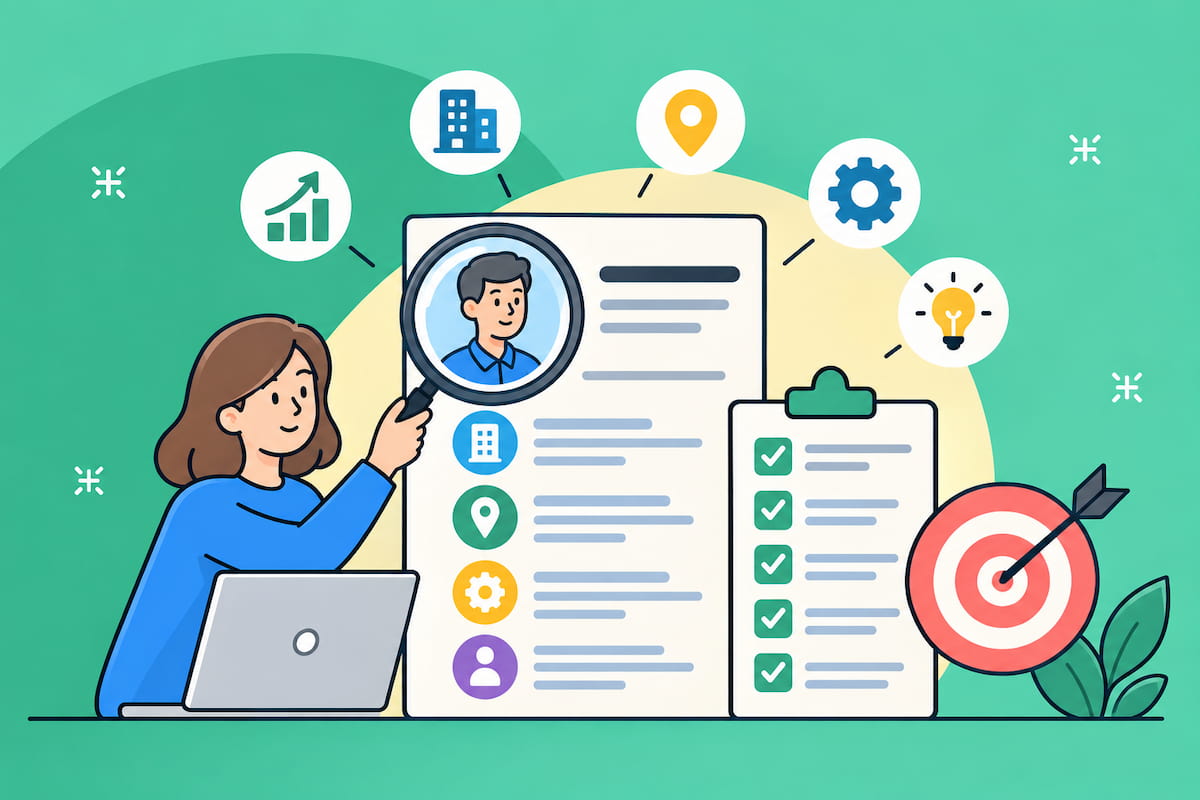
First things first, start by adjusting your focus. If earlier on, posting blogs or running ads tailored at mass was not a big deal, these days you want to make sure you know exactly who you want to attract. By this, we mean portraying your ideal customer profile (ICP) in small detail – not just a company size or industry.
Consider factors such as:
- Business model and revenue;
- Company size;
- Location and target markets;
- Technology stack;
- Common business problems;
- Buying triggers;
- Typical deal size;
- Decision-makers involved;
- Reasons customers choose you;
- Reasons customers walk away.
Furthermore, your ICP should also explain why a company becomes a good prospect. For example, a “SaaS company with 50-200 employees” could be a good starting point, but a “SaaS company with 50-200 employees that is actively expanding their teams and struggling with manual lead qualification” would be a much better target.
Such a level of detail will not only give your marketing team something to work with but also make it easier to personalize your campaigns later on. After all, effective B2B lead generation strategies start with knowing exactly who you want to attract.
Create Content That Solves Buying Problems
Generic content doesn’t work anymore. AI has made it easier for everyone to churn out thousands of articles in a matter of minutes, but how much of this content is actually read by prospects?
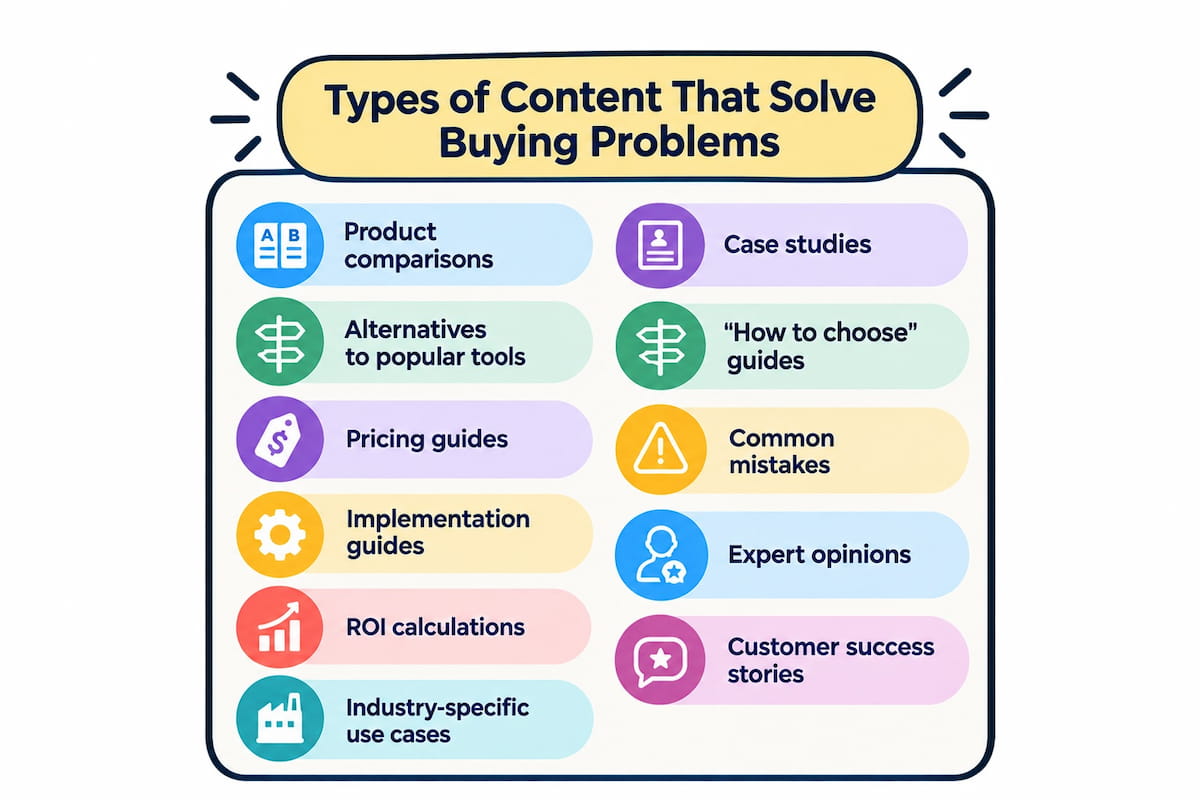
In 2026, your content needs to do more work. Instead of writing a post like “What Is CRM Software”, think of questions and problems your prospects might have when considering a purchase. Your goal is to uncover the underlying reasons they make them search for answers, compare solutions, and ask for recommendations.
Here are a few examples of topics that could help you effectively drive potential leads:
- Product comparisons;
- Alternatives to popular tools;
- Pricing guides;
- Implementation guides;
- ROI calculations;
- Industry-specific use cases;
- Case studies;
- “How to choose” guides;
- Common mistakes;
- Expert opinions;
- Customer success stories.
Don’t try to stuff every page with keywords. Algorithms have changed and can spot content written for Google from far away. These days they favor useful content that brings value and meets potential customers’ needs.
This matters even more as AI changes search. HubSpot’s 2026 research found that half of consumers use AI-powered search, while many businesses are adapting their SEO strategies for AI-generated search results.
So, create content that answers questions clearly, supports claims with evidence, and shows real expertise. This should be a key part of your B2B lead generation strategies because useful content can bring potential customers to your brand long before they are ready to speak with a sales rep.
Optimize for AI Search, Not Just Google
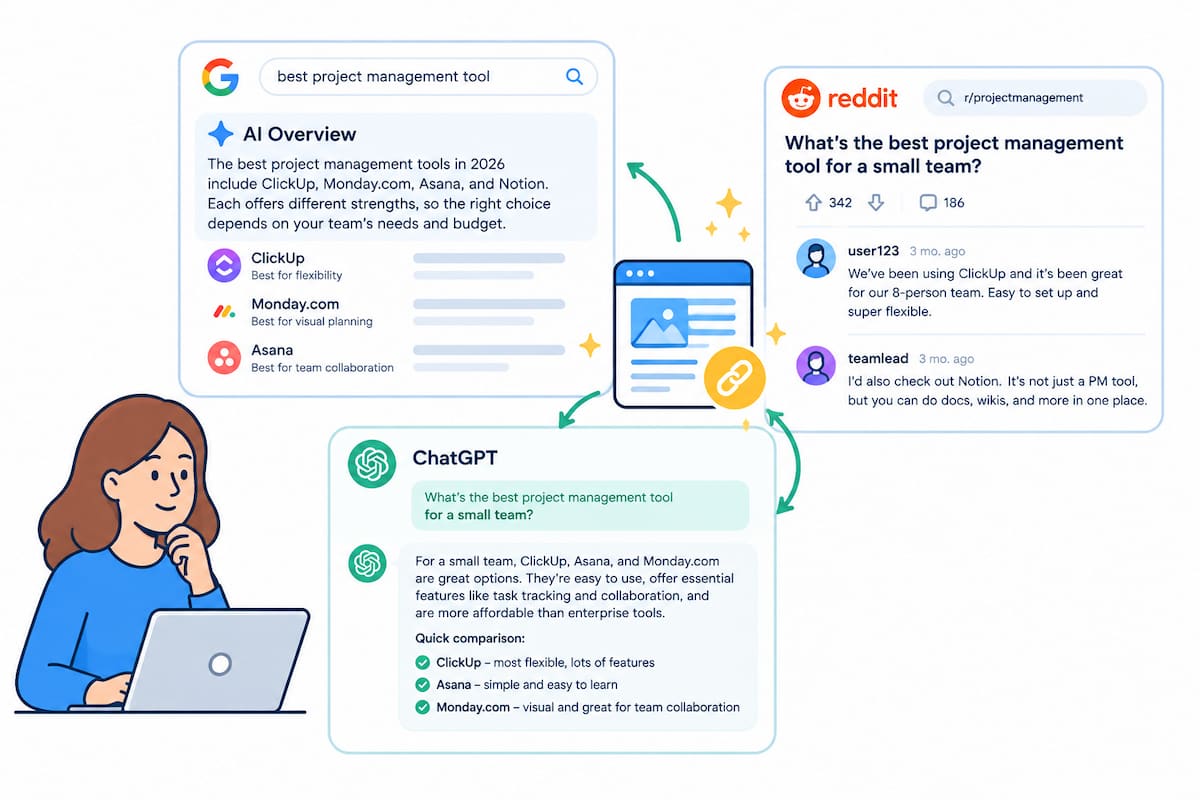
Many people assume that SEO no longer works, which couldn’t be further from the truth. SEO still matters, but with the emergence of AI, the search journey has become longer.
Modern buyers don’t just ask Google. They may also go on ChatGPT to ask for recommendations of the best project management tool, for example, read Reddit threads, visit vendor websites, and then – again – return to LLMs to compare their picks.
Your brand needs to show up throughout that journey.
This means creating content that is:
- Easy for search engines and AI systems to understand;
- Specific rather than vague;
- Supported by original data or expert insight;
- Structured around real questions;
- Updated regularly;
- Consistent with your brand’s point of view;
- Published across more than one relevant channel.
The key is, don’t view it as an excuse to pump out more content. While AI can help create content faster, make sure you remain focused on demonstrating your expertise and making your content worth reading.
Use LinkedIn to Build Demand Before Asking for a Lead
For many B2B companies, LinkedIn is more than a place to post company announcements. It can be a demand-generation engine.
Instead of constantly pushing product pages and sales messages, give potential buyers useful information. For example, you can share lessons from customer projects, explain industry changes, challenge common assumptions, and show how your team solves problems.
Another good way to utilize LinkedIn is to ask employees to write content and post it under their profiles. Many people find it easier to connect with real people rather than logos.
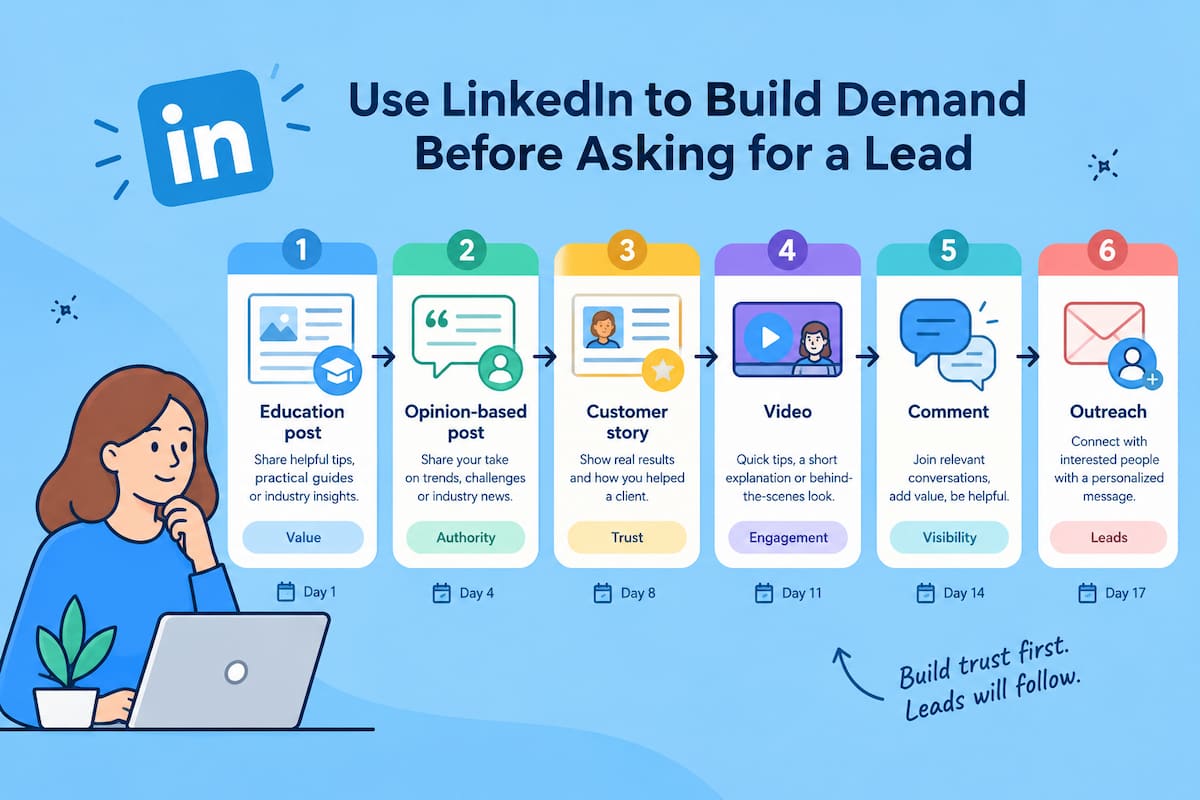
Here’s how a simple LinkedIn strategy typically works:
- One educational post each week;
- One opinion-based post from a subject-matter expert;
- One customer story or practical example;
- Short videos explaining common problems;
- Comments on relevant industry discussions;
- Occasional direct outreach to high-intent prospects.
The key is to avoid turning every interaction into a sales pitch. Give first – ask later.
Build Better Lead Magnets
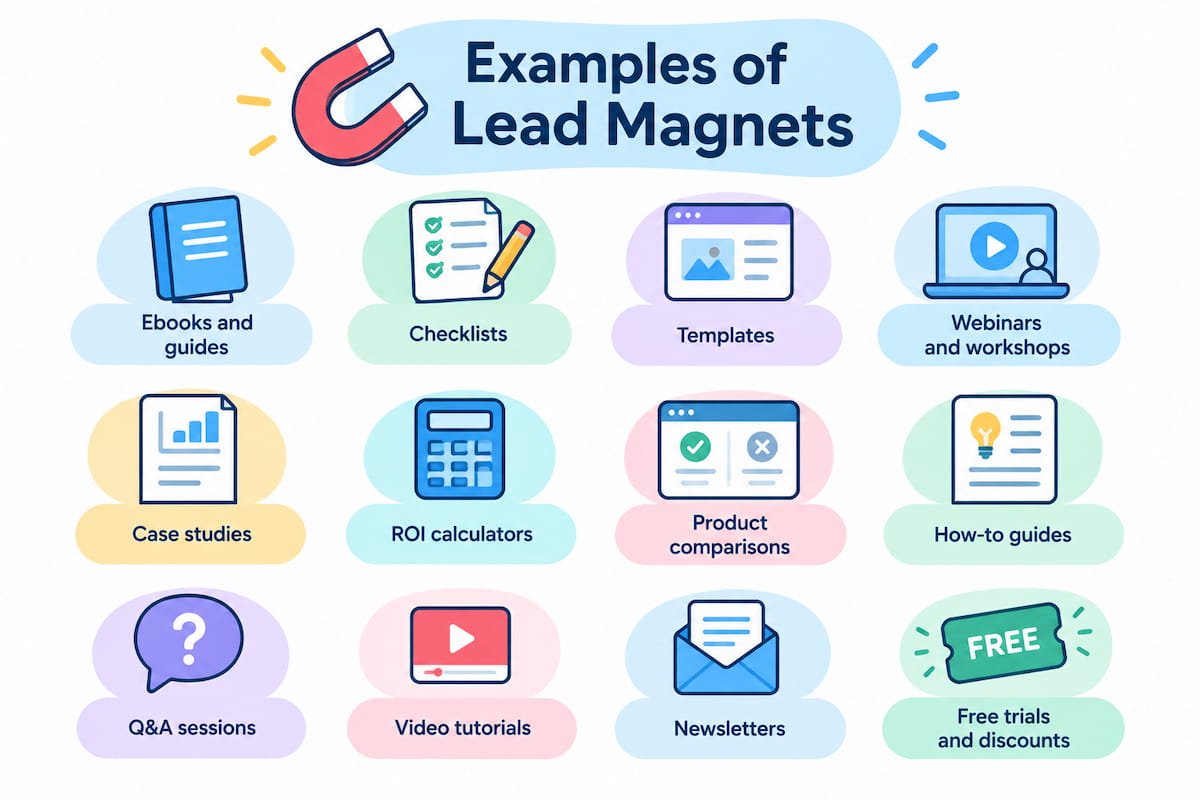 Not every visitor is ready to book a call with a sales rep. Some might still be considering options, while others may be hesitating about which vendor to choose. This is where the skill of building lead magnets comes to the forefront. The right lead magnets can help you capture potential buyers without forcing them to jump on a call too early.
In B2B, good lead magnets include:
- Industry reports;
- Original research;
- Templates;
- Checklists;
- Calculators;
- Benchmark reports;
- Detailed guides;
- Webinars;
- Product comparison sheets;
- ROI tools.
In short, it must be something that can solve a small but important problem. For example, an accounting software company could offer a “Month-End Close Checklist” rather than a generic “Guide to Accounting Software.” The first option attracts people who have a real problem. That makes the resulting leads much more valuable.
Personalize the Buyer Journey
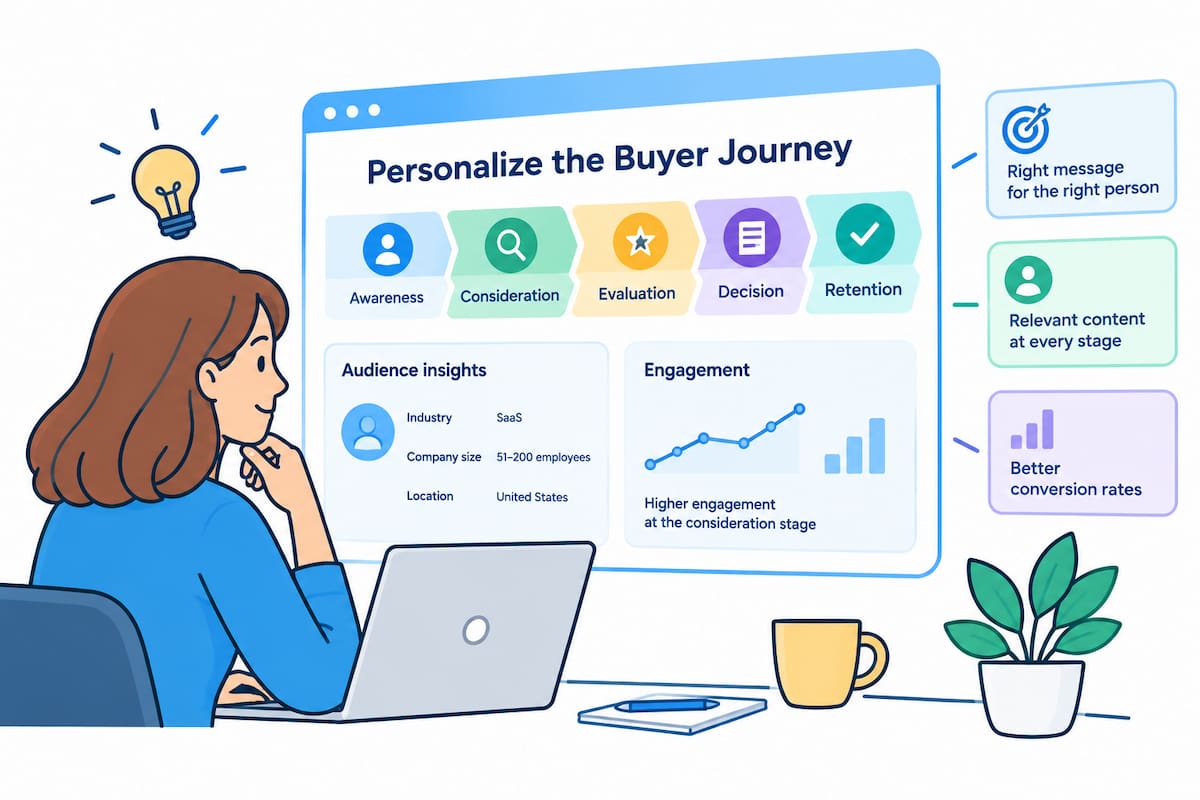 Earlier on, personalization basically meant adding a first name to an email or a message. However, these days it means much more. Modern B2B buyers are used to being addressed by their names. What they are looking for is someone who actually understands their needs.
If someone has spent ten minutes reading your pages about enterprise cybersecurity, sending them an email about basic security tips makes little sense. What could be more useful is to invite them to a webinar that covers the exact problem they’ve been researching.
Understanding behavioral data is crucial. If you know what prospects research and what problems they try to solve, you can make your next interaction more relevant.
Here are a few metrics you should track to always be on top:
- Pages viewed;
- Content downloaded;
- Industry;
- Company size;
- Previous conversations;
- Product interest;
- Buying stage;
- Email engagement.
AI can make this process easier by helping teams analyze large amounts of customer data and identify patterns. Just make sure to vet the data so you get accurate and complete reports.
Combine Outbound With Intent Signals
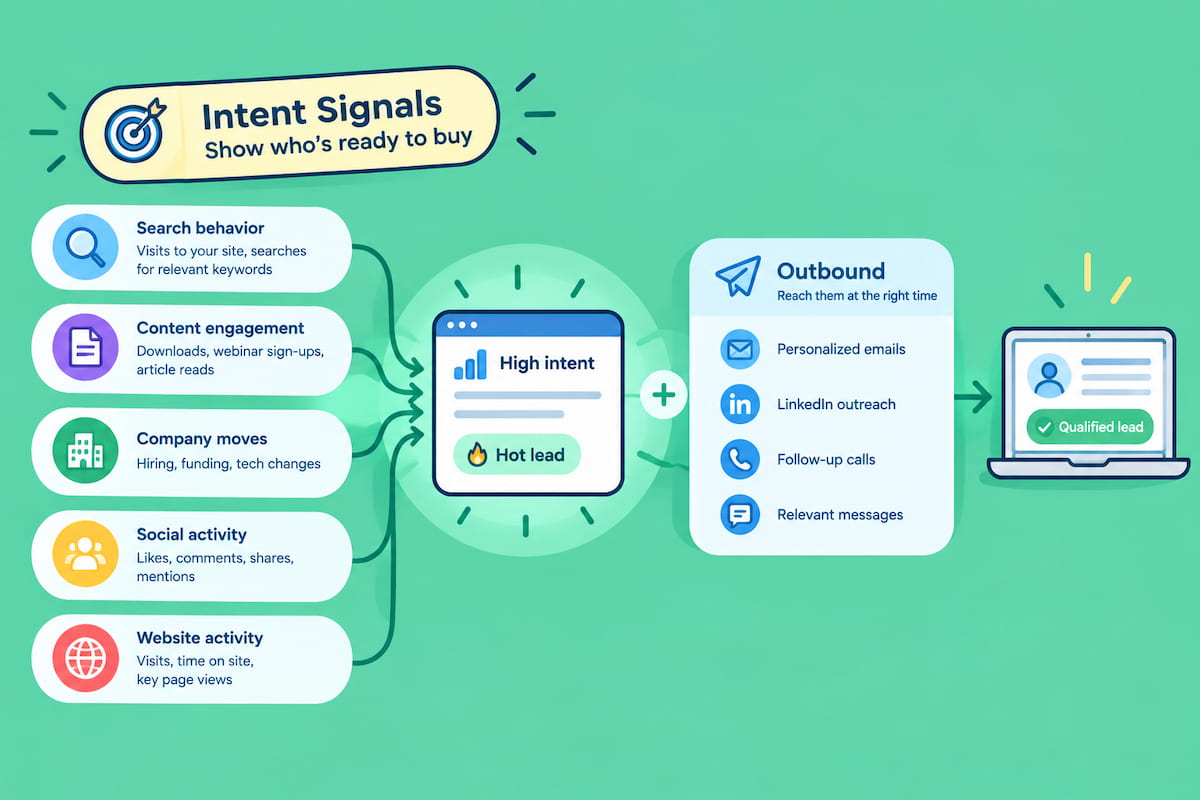
Cold outreach is not dead, but it must be done the right way. There is a big difference between sending 500 generic emails and contacting 20 companies that have shown signs of buying.For businesses looking to scale direct outreach, a cold calling call center can help teams connect with qualified prospects through more focused and personalized conversations.
Look for intent signals such as:
- A company hiring for a role related to your product;
- A new executive joining the business;
- Expansion into a new market;
- Recent funding;
- A new product launch;
- Visits to high-intent website pages;
- Downloads of product-focused content;
- Engagement with comparison content.
And then tailor your outreach around the event. Instead of saying, “We help companies improve sales,” explain why the recent change at that company may create a specific challenge. That gives your message a reason to exist.
Turn Your Website Into a Lead Generation Tool
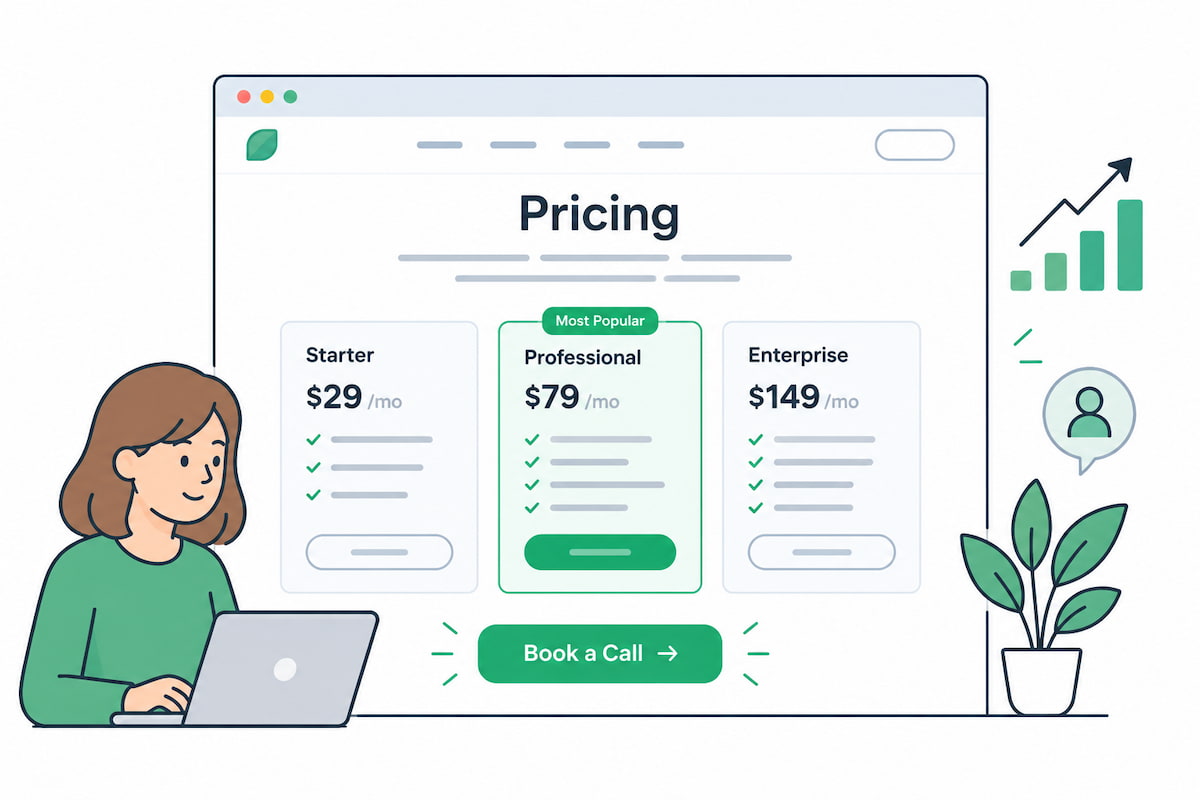 Give your site a second look. If it was designed some time ago and only tells visitors what your company does, it’s time to give it a revamp. Modern websites need to help prospects decide what to do next.
Review your “money” landing pages and ask:
- Is the value proposition clear within seconds?
- Does the page speak to a specific audience?
- Is there enough proof?
- Are customer examples easy to find?
- Is the CTA relevant to the buying stage?
- Can visitors contact someone without jumping through hoops?
- Does the page work well on mobile?
Do not put the same “Book a Demo” button everywhere and call it a day.
If someone’s reading a beginner’s guide, they may be more interested in reading more educational content. So, instead of “Book a Demo”, it’d be better to put the “Read More” button. If people are comparing your product with a competitor, they may be ready for a demo. And if someone’s landed on your pricing range page, they may want to book a call.
Match the CTA to the intent. Small changes like these can make a noticeable difference to your B2B lead generation strategies by removing unnecessary friction.
Use AI to Speed Up Lead Qualification
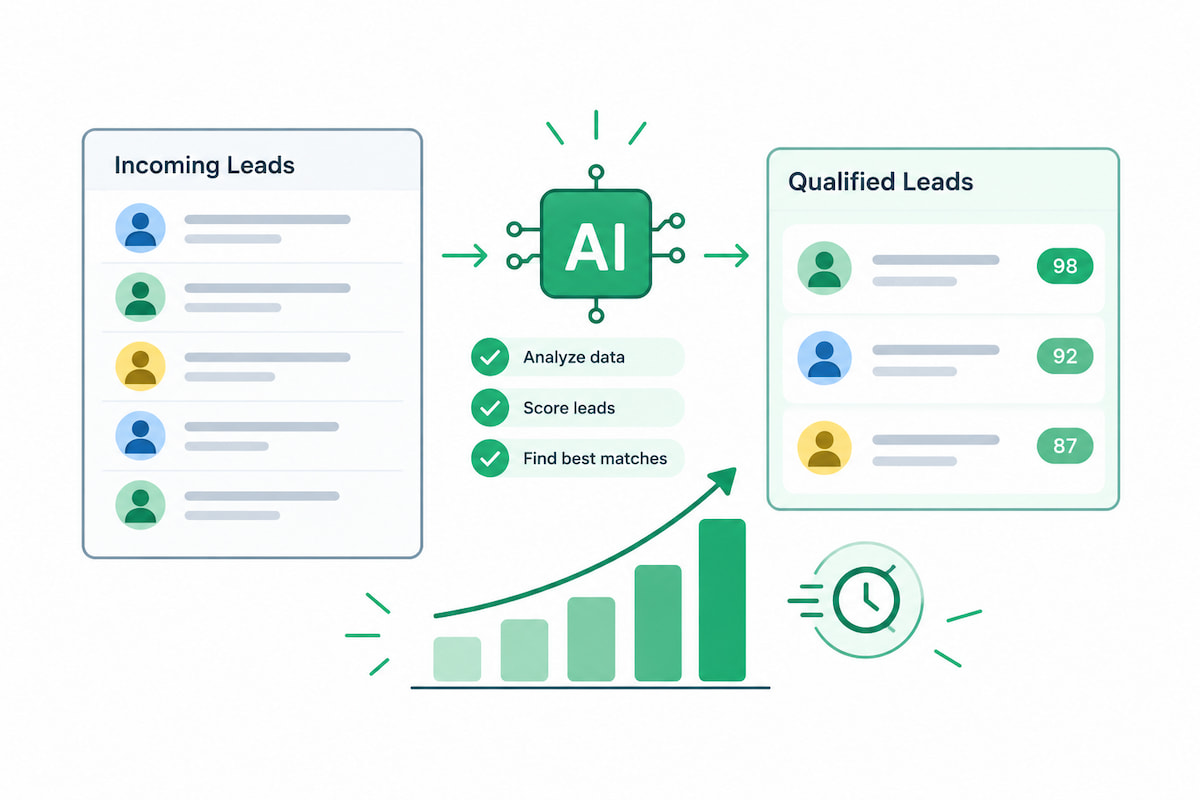
Incorporate AI into lead management to lift the burden off the shoulders of your marketing team. Sure, you’d still want human input, but with AI you can automate many repetitive and time-consuming tasks and give your team more time to focus on prospects that are more likely to convert.
For example, AI-powered systems can help you:
- Score leads;
- Segment prospects;
- Identify high-intent accounts;
- Summarize customer interactions;
- Personalize emails;
- Recommend follow-up actions;
- Qualify inbound inquiries;
- Identify accounts that may be ready to buy.
As mentioned, not everything needs to be automated, but if you can relay any of the mundane work, you should do it.
Track Lead Quality, Not Just Lead Volume
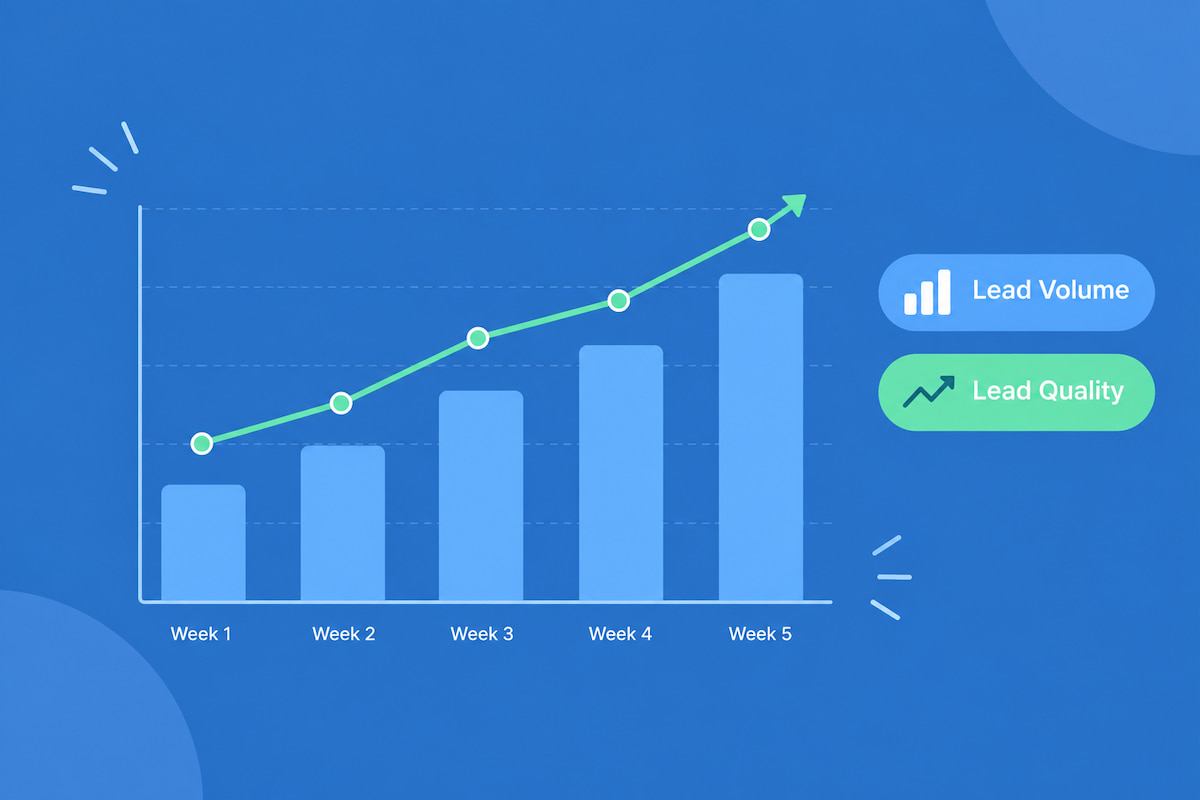
One of the biggest mistakes in B2B marketing is keeping an eye only on a growing lead count and ignoring – or not giving enough attention to – what happens after those leads enter the CRM. The thing is, thousands of poor leads are not equal to 50 qualified opportunities.
This is why you should look beyond the number of leads generated and track what happens at every stage of your funnel. Are your leads turning into marketing-qualified leads? How many of those seem to be ready to take the next step? And, most importantly, how many eventually become your paying customers?
Here are some of the numbers worth tracking:
| Metric | What It Tells You |
| Lead volume | How many prospects you’re attracting |
| Lead quality | Whether those prospects fit your ICP |
| MQL-to-SQL rate | How well marketing-qualified leads become sales opportunities |
| SQL-to-customer rate | How well sales converts qualified prospects |
| Customer Acquisition cost | How much you spend to win a customer |
| Pipeline generated | How much potential revenue marketing creates |
| Revenue per channel | Which channels actually contribute to growth |
Don’t just look at traffic or impressions. While they can be useful, revenue-related metrics should have the final say.
Double Down on What Already Works
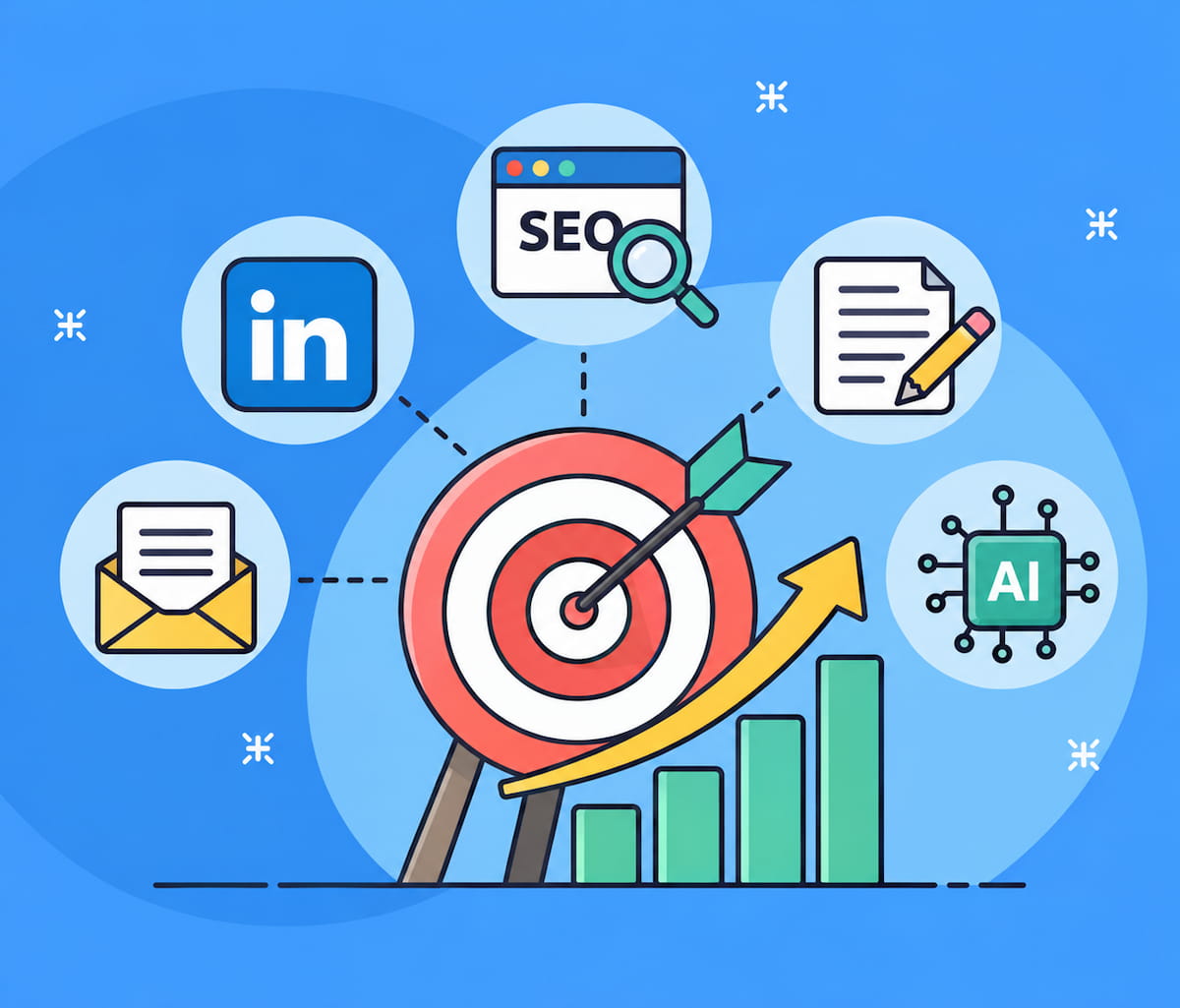
You do not always need another channel.
Sometimes the smartest move is to improve the channels already producing results.
Suppose your data shows that organic search creates fewer leads than paid ads but produces better opportunities at a lower acquisition cost. That is a strong reason to invest more in SEO.
The same applies to email, webinars, LinkedIn, Facebook, partnerships, referrals, and other channels.
HubSpot’s 2026 data shows website/blog/SEO among the most-used and highest-ROI marketing channels, followed by paid and organic social and email.
Think of your marketing budget as a garden. You do not need to plant 20 new seeds every month. Sometimes you just need to water the ones that are already growing.
Build a Multi-Channel B2B Lead Generation Strategy
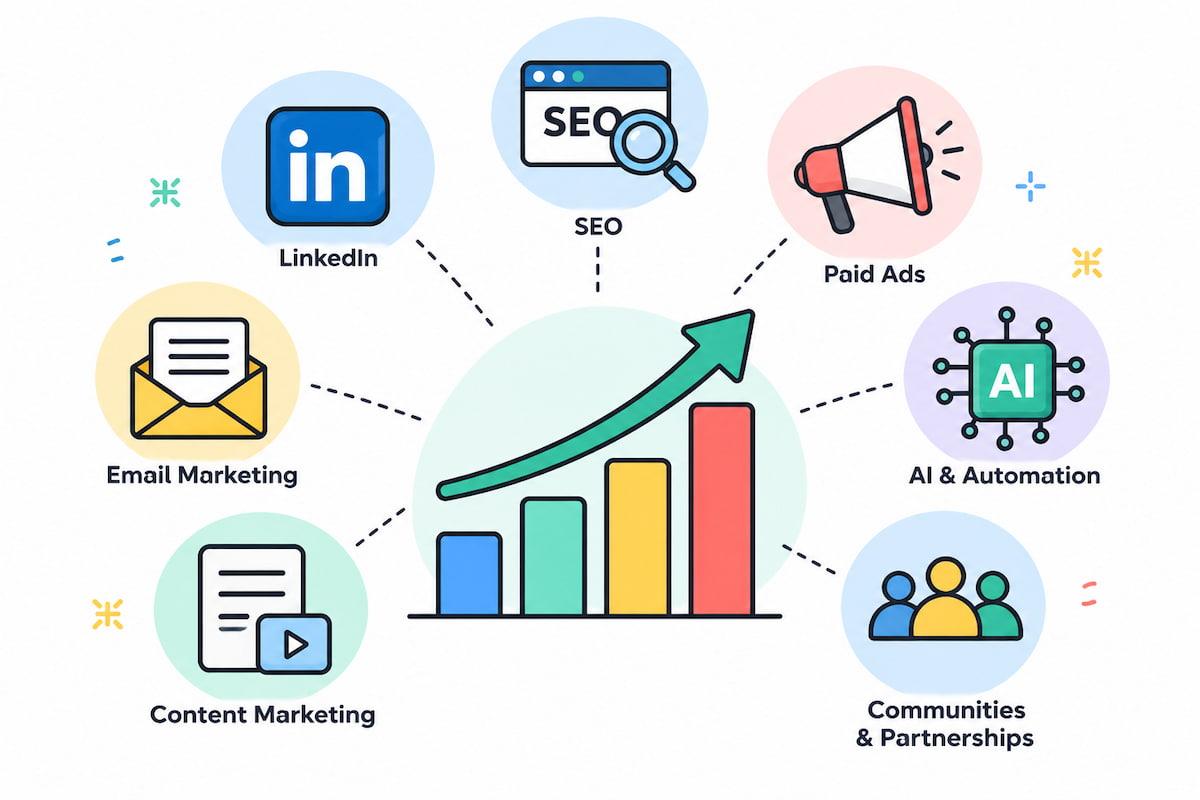 No single channel should carry your entire lead generation program.
A prospect may discover your company through Google, see your LinkedIn post a week later, download a report, receive an email, and eventually book a call.
Those interactions work together.
A strong 2026 strategy could look like this:
- SEO: Capture people actively searching for solutions;
- AI search optimization: Increase the chance of being surfaced in AI-generated answers;
- LinkedIn: Build trust and create demand;
- Email: Nurture prospects over time;
- Paid search: Capture high-intent traffic;
- Webinars: Demonstrate expertise and collect qualified leads;
- Case studies: Reduce perceived risk;
- Outbound: Reach high-value accounts directly;
- Partnerships: Tap into trusted audiences you do not own.
You do not need to use every channel at once. Start with the two or three that fit your audience best, then expand when the data supports it.
Keep Improving Your B2B Lead Generation Strategies

There is no magic button for B2B lead generation.
The companies that win in 2026 will not necessarily be the ones publishing the most content or running the biggest ad campaigns. They will be the ones that understand their buyers, create useful experiences, use data intelligently, and build trust before asking for the sale.
AI has made marketing faster. It has also made mediocre content easier to produce. That creates an opportunity. When everyone can publish more, being genuinely useful becomes a competitive advantage.
Start with a clear ICP. Create content around real buying problems. Make your website easier to convert. Use intent data to improve outreach. Personalize the buyer journey. Automate repetitive tasks, but keep human judgment in the loop.
Most importantly, measure what happens after the lead arrives.
Because the goal of modern B2B lead generation is not to fill a CRM with names. It is to create conversations with people who have a real reason to buy — and turn those conversations into lasting revenue.